Author: Mohammed Rujel

  • Do Plant Cells Have Peroxisomes? A Complete Analysis

    Do Plant Cells Have Peroxisomes? A Complete Analysis

    Peroxisomes are one of the most important parts of a cell. These are found in all eukaryotic cells, be they small unicellular organisms or multicellular ones. The single membrane-enclosed organelles are also called microbodies. 

    Now you might be asking, do these cells of plants have peroxisomes? The answer is yes.

    If you have noticed the small vesicles floating around the plant cell in the cytoplasm, they are the peroxisomes. Their diameter ranges from 0.1 to 1 micrometer. Despite their small size compared to the size of the entire cell, they’re a major part.

    The reason they are named peroxisomes is that they produce hydrogen peroxide. It also has enzymes for the pentose phosphate shunt.

    Are Peroxisomes Present in the Plant Cells?

    Are Peroxisomes Present in the Plant Cells

    The answer is yes, plant cells have peroxisomes—and it is one of the most crucial parts of the plant cell.

    They act to store Beta-oxidation fatty acid in the plant cells. Besides, they are also responsible for the production of two phytohormones, namely Indole-3-acetic acid or IAA and Jasmonic Acid or JA. These conjuncts with mitochondria and chloroplasts to boost their functions.

    What Do They Do in Plant Cells?

    What Do Peroxisome Do in Plant Cells

    Since it is one of the major parts of the plant cell, it has many functions to keep the cell robust and working at its best. Their primary role is to break down organic molecules inside of the cell by oxidation process to produce hydrogen peroxide.

    Hydrogen peroxide or H2O2 is then converted into water and oxygen. The peroxisome encloses about 50 different enzymes inside itself. None of it has any contact with the cytoplasm as it is isolated by the lipid bilayer single membrane.

    Lipid catabolism takes place by the enzymes of the peroxisome. It basically means the long-chain fatty acid is broken down by the oxidation process. The fatty acid is broken down in the chemical Acetyl Coenzyme A (CoA), which is responsible for the production of a large amount of metabolic energy.

    There is also another type of enzyme that is produced by the peroxisome which is responsible for the breaking down of Hydrogen peroxide or H2O2. Peroxisomes are also responsible for the production of phospholipids in the cell. 

    Are they necessary for plant cell function?

    peroxisome plant cell function, Are they necessary for plant cell function

    The peroxisome, just like most other major—or even minor organelles in the cell, is very important for the cell to function properly. This, in turn, allows the entire plant to grow by creating a fully functioning system.

    For the fixation of carbon into sugar, carbon dioxide or CO2 is needed. But Chloroplast cannot produce Co2 directly. Instead, it produces Glycolate. And peroxisome comes into play here.

    This Glycolate is passed through peroxisome for the production of glyoxylate. The Glyoxylate is again converted into Glycine in the peroxisome. Lastly, this Glycine is turned into Serine, and Co2 is produced in this process.

    In the presence of sunlight, photorespiration takes place. And that takes place with the help of peroxisomes as well.

    Peroxisome produces catalase, which again helps in breaking down the H2O2, which is produced during the conversion of Glycolate into Glyoxylate. A high concentration of H2O2 can be really harmful to the cell, causing an imbalance in the entire system.

    That is why peroxisome is a must for the conversion of Glycolate into Glyoxylate, because, without catalase—which is produced only in the peroxisome, the H2O2 will end up damaging the cell. This is the detoxification step of the peroxisome in plant cells.

    How do peroxisomes benefit plants?

    If the plant cells are benefitted from the presence of peroxisomes in themselves—it automatically means that the entire plant is being benefitted. And plants are hugely benefitted from the existence of these organelles.

    Due to allowing all the processes, including Beta-oxidation, helping in the production of Co2, photorespiration in leaves, and so on, glycolates play a significant role in ensuring that the plant is growing and functioning normally.

    IAA is responsible for the growth regulation of the plant and the development of the cell. It is responsible for the proper division of cells, differentiation of tissue, and so on. All these make sure the plant is strong and grown. JA is also a growth-regulating substance in the plant’s body.

    Conversion of Glycolate and ultimately producing Co2 by the mitochondria takes the help of peroxisomes. And this is one of the most important functions of the peroxisomes. It boosts the metabolism of the plants helping them to grow and fight anything coming in their way to growth.

    In higher plants, photorespiration is also a very important process allowing it to respire. This process is also known as oxidative photosynthesis.

    Basically, the role of peroxisomes in a plant body is immense. Without the metabolism provided by the peroxisome, it will be impossible for the plant to fight back against anything, and eventually, it will wither away.

    Related Posts:

    Do Plant Cells Have A Permanent Vacuole? Learn About Its Role Here

    Do Plant Cells Have Cytoskeleton? Functions & Structure

    Are Plants Sentient? An In-Depth Analysis

    Are Plants Asexual? An In-Depth Analysis

    How do plant cells compare to other cell types in terms of peroxisome presence and function?

    Peroxisomes are not exclusive to plant cells. As mentioned above, these organelles are found in all eukaryotic cells, be it animal cells, plant cells, or the cell of a fungus. But of course, it does not function exactly the same in all cells.

    When it comes to planting cells, the function of peroxisome mainly lies in providing a solid metabolic system. And it is done by the conversion of carbon into sugar and providing a proper energy source for the plants to live off of. This is vital for the health of the plant and its parts.

    On the other hand, the functions are very different when it comes to animal cells. Here, they work also work in breaking down cholesterol and bile acids helping in the digestion of food. 

    They also partake in the synthesis of lipids which are used to make myelin. Also, the reason our body is able to handle ethanol is because of peroxisome. Lastly, peroxisomes break down purines to uric acid in the animal body.

    Conclusion

    Plant cells surely have peroxisomes. And not only that, it is one of the most important parts of the entire cell—keeping balance in the entire body of the plant. Without the proper functioning of the peroxisome, the plant will have a poor metabolic system and eventually die.

    Related Resources:

    https://www.frontiersin.org/articles/10.3389/fpls.2019.00705/full

    https://www.sciencedirect.com/topics/agricultural-and-biological-sciences/peroxisome
    https://www.ncbi.nlm.nih.gov/pmc/articles/PMC3406917/#:~:text=Peroxisomes%20are%20the%20sole%20site,conjunction%20with%20mitochondria%20and%20chloroplasts.

  • Examples of Herbaceous Plants That You Can Plant In Garden

    Examples of Herbaceous Plants That You Can Plant In Garden

    In our everyday cooking, herbs are an inseparable part. Be it seasonings or garnish, for aroma, or simply for a healthy diet, herbs are always there with us. But do we ever wonder if we could grow them at home instead of buying them from the stores? 

    Before we answer that, we need to dive deeper into the characteristics and examples of herbaceous plants. We will list all of the details in this guide so you can get started without any delay!

    What Are Herbaceous Plants?

    What Are Herbaceous Plants

    Herbaceous plants are those soft and usually small members of the flora AKA the plant kingdom that does not have a wooden stem above the ground. They can be classified into three types depending on their lifespan and growth habit- annual, biennial, and perennial.

    Annual Herbs

    Annual herbs are plants that die both above and below the ground when their growing season ends. They complete their entire life within a year when they flower, germinate, and bear fruits before dying off. 

    Some of these plants can have their dead part on the ground and still be used as decorations if they suit a designer or homeowner’s aesthetics. Basil, cilantro, etc., are some commonly known annual herbs.

    Biennial Herbs

    Biennial herbaceous plants complete their life cycles in two years. They grow and flower in the first year, and by developing a root system and sometimes underground foliage, they survive adverse seasons. In the second year of their growing season, they germinate and bear fruits. Spinach is a widely consumed biennial herb.

    Perennial Herbs

    Perennial herbs have quite a long lifespan. They grow for years and keep producing flowers, fruits, and seeds. These herbs shed their old parts, foliage in particular, every year and regenerate them. 

    Dahlia is an example of a perennial herbaceous plant that grows during northern spring and tropical winter to spring. 

    https://m.youtube.com/watch?v=2BAOcNUoymg

    Herbaceous Plants Examples

    Pansy- Viola x wittrockiana

    Pansy- Viola x wittrockiana

    Kingdom:    Plantae

    Clade:    Rosids

    Order:    Malpighiales

    Family:    Violaceae

    Genus:    Viola

    Species:    V. x wittrockiana

    Pansies are flowers that look like a cheerful man with thick brows and a mustache. These brightly colored flowers have overlapping petals that are heart-shaped. 

    Pansies prefer cooler weather, and they can either be annual, biennial, or perennial, depending on the climate they are raised in. Mostly, they become fragile in the summer heat.

    Pansies grow 6-9 inches tall and 9-12 inches wide. Plant them in early spring and fall to get the most charming outcome. Partial sun is needed; in other words, the morning sun is good for its growth, whereas the afternoon sun is harmful. 

    Pansies can even survive the frosty weather. Plant them with 7-12 inches gaps and never use fertilizers with too much nitrogen in them.

    Zinnia- Zinnia elegans

    Zinnia- Zinnia elegans

    Kingdom:    Plantae

    Clade:    Eudicots

    Order:    Asterales

    Family:    Asteraceae

    Subfamily:    Asteroideae

    Tribe:    Heliantheae

    Subtribe:    Zinniinae

    Genus:    Zinnia

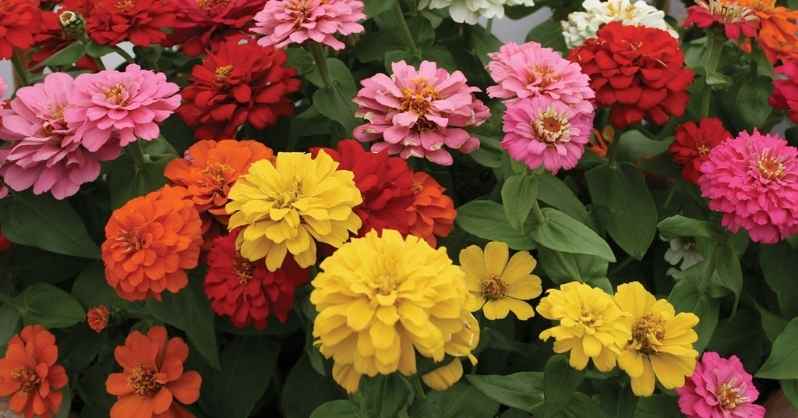
    Zinnia comes from the same family as daisy does, and most of the species originate from North America, some from Central America. While this annual shrub-like herbaceous plant can bear low temperatures, it cannot survive a heavy winter. 

    Zinnia is a butterfly magnet and also attracts other useful insects and pollinators. It is a colorful addition to your garden as the species vary in appearance- some look like Dahlias, some like daisies, and others, like cacti. They come in purple, red, white, yellow, orange, pink, and whatnot. 

    The leaves are narrow, and the flowers are often dried and used in crafts. The more you cut a Zinnia, the more it grows.  

    Giant Fleece Flower- Persicaria polymorpha 

    Giant Fleece Flower- Persicaria polymorpha

    Kingdom:    Plantae

    Clade:    Angiosperms

    Order:    Caryophyllales

    Family:    Polygonaceae

    Subfamily:    Polygonoideae

    Genus:    Persicaria

    Giant fleece flowers are perennial herbs that can grow up to 5 feet, making themselves appear like shrubs. They get 3-4 feet wide. With white flowers and deep green, pointed leaves, these plants bloom in summer and die out in winter. 

    You’ll need to provide external support for their stems during spring. Giant fleece flowers originated in Asia, and being adaptable, they require little maintenance and are popular among butterflies. 

    Their seed heads in the late season are delightful to look at. The best time to plant them is in early spring.

    Leopard Plant- Farfugium japonicum 

    Leopard Plant- Farfugium japonicum 

    Kingdom:    Plantae

    Clade:    Angiosperms

    Order:    Asterales

    Family:    Asteraceae

    Genus:    Farfugium

    Species:    F. japonicum

    The coastal warm-humid region of Japan, Korea, and Taiwan is known to be the habitat of leopard plants. These little chrome-yellow flowers with large leaves grow along riverbanks, streams, and anywhere near natural water bodies. 

    The flowers grow in groups, and the heart-shaped leaves have yellow spots on them. This perennial herb grows 1-2 feet in length and spreads. Summer is the best time for its growth and thus, planting it in early spring gives you the best results. 

    The toxicity, however, should be taken into account before planting it.

    Oriental Poppies- Papaver orientale 

    Oriental Poppies- Papaver orientale

    Kingdom:    Plantae

    Clade:    Angiosperms

    Order:    Ranunculales

    Family:    Papaveraceae

    Genus:    Papaver

    Species:    P. orientale

    Out of all the beautiful species of poppies, we chose oriental poppies due to their vibrant red and orange bloom. These herbaceous perennials have lovely deep green thistle-like foliage in spring, but the flowers still take the spotlight. 

    Oriental poppies can also have white, peach, maroon, and salmon variations. But no matter what shade they are, they look like ‘origami’ AKA folded paper crafts. The stiff hairy-stemmed flower pods are inclined towards the ground but raise their head as they reach full bloom.

    Remember, the best time to grow oriental poppies is in fall and spring as they’re fast growers, adding oriental value to your garden. However, they die out in winter, so make sure you choose catmint or phlox, or similar plants to fill your flower beds. Poppies can be used in ikebana and can also be dried to use for several other crafts. 1-3 feet tall and 1-2 feet wide, these plants are toxic to humans, cats, and dogs.  

    Japanese Knotweed- Polygonum cuspidatum

    Japanese Knotweed- Polygonum cuspidatum

    Kingdom:    Plantae

    Clade:    Angiosperms

    Order:    Caryophyllales

    Family:    Polygonaceae

    Subfamily:    Polygonoideae

    Genus:    Polygonum L.

    Japanese knotweed, as its name suggests, is a native herbaceous perennial of Japan that was later on cultivated in the UK and the USA as ornamental plants in the 19th century. 

    These plants grow up to 9 feet, with their roots reaching 65 feet underground. The semi-woody bamboo-like stems might almost make one think that they’re shrubs. Their rapid growth and the ability to spread through stone masonry make it quite difficult to control.

    The Japanese knotweed is from the same family as the buckwheat plant in the kdrama ‘Goblin’ that fans moon over. It requires warm and moist weather, but the soil needs to be crumbly to prevent the crazy spread. 

    The plant dies in winter, leaving the roots buried in the ground. For this plant, the best time for its growth is from spring to summer. 

    Basil- Oscimum basilicum 

    Basil- Oscimum basilicum 

    Kingdom:    Plantae

    Clade:    Eudicots

    Order:    Lamiales

    Family:    Lamiaceae

    Genus:    Ocimum

    Species:    O. basilicum

    One of the core ingredients of Italian cuisine, basil is a universally loved herb known for its versatility and aroma. It has several variations such as sweet basil, lemon basil, red Rubin basil, etc. And you’d always find it in Mediterranean, South Asian, and South-East Asian cooking. 

    In Europe, basil is believed to bring wealth. In Hindu culture, holy basil is considered to be the habitat of gods. 

    Basil is an annual herbaceous plant that thrives in warm climates. It dies in the cold season and thus needs to be planted every year. Basil sometimes reseeds itself. 

    The flowers grow and produce seeds that can, later on, be preserved until the next season for replanting. Basil leaves can also be stored frozen to use during the off-season. 

    Characteristics of Herbaceous Plants

    Most herbaceous plants are annual, but of course, there are biennial and perennial herbs too. Also, not all herbs are small in size. They vary in spread, foliage, roots, stem lengths, and size. However, there are two common properties they carry-

    • Green, non-woody stems
    • Delicate root structures

    A Few Tips on Taking Care of herbaceous plants

    Whether or not you’re an expert plant parent or a beginner in this journey, we are here to guide you with our useful nuggets of knowledge. 

    Most annual herbs are fragile and die quickly if they’re not taken care of properly. Few annual herbaceous plants are grown in winter in the northern regions. Other than those, most prefer spring and summer warmth. 

    Fennel, lemongrass, and scented geranium are some of the perennial herbs that can’t live in the frost. So they’re grown as annuals in colder regions.

    Since herbaceous plants have non-woody stems, they can require external support to grow and spread their foliage. You must also keep track of the time you let it absorb sunlight and heat. Too much sun exposure can make your herbs sick or even cause death.

    Biennials and perennials can survive off-seasons through their roots, leaves, or other parts, but some annual herbs need to be replanted. So, do store seeds when the flowers bear fruits. Anise, dill, garlic, etc are hardy annuals that can survive the snow. Basil, sesame, cumin, etc., tender ones that cannot bear with the frost. 

    To keep your flower beds appealing, you’ll need to refill the empty spaces left by the annuals with plants that grow in the cold.

    Harvest the annual herbaceous plants before they wear off. Some of them have dead parts you can use for decoration and crafting. 

    Common Pests and Diseases of Herbaceous Plants (and How to Treat Them)

    • Aphids- Preying on tender leaves, these pests are seen on fast-growing herbs. Use horticultural soaps or neem oil to eradicate them.
    • Spider mites- Tiny, almost microscopic spider sucking on leaves, causing yellow patches, which turn red and sickens the herb. Use steamy water. 
    • Japanese beetles- These grow mostly on basil. Remove the infected leaves or dump soapy water on them.
    • Parsley worms- Caterpillars who simply eat your herbs, causing no disease to your precious plants.
    • Flea beetles- They create pinholes on leaves but no serious damage.
    • Spittlebugs- These pests leave scars that look like spit on leaves. Just wash them off with water.

    Apart from these, there are leafhoppers, weevils, whiteflies, leaf miners, etc. are commonly seen on herbs but hardly ever cause serious issues.

    Can You Eat Herbaceous plants?

    Absolutely yes! Herbaceous plants offer a variety of options. Some herbs offer fresh leaves, while some others offer fruits. Some can provide flowers, and some can give you nutritious seeds. 

    Garlic, fennel, lemongrass, basil, parsley, dill, coriander, rosemary, etc. are the most common herbaceous plants that we consume almost every day, in one form or another. You can grow a herb garden for the sole purpose of using them in your cooking. 

    Also, let’s admit it, the satisfaction of growing fresh herbs at your home successfully hits different. 

  • Do Plant Cells Have Flagella for Movement? Learn the Facts

    Do Plant Cells Have Flagella for Movement? Learn the Facts

    Plant cells share a lot of similarities and dissimilarities with animal cells. Some structures are present equally in both plant and animal cells. However, there are some structures which are exclusive only to animal cells or plant cells. 

    One such structure is flagella. Flagella is the structure in cells that helps with motility and progression in a favorable environment. But do plant cells have flagella? Is there any role of flagella in plant cells?

    Let’s find out what flagella is and how it functions in the discussion below.

    What are flagella, and What Do they Do?

    What are flagella, and What Do they Do, flagella structure and function

    Flagella are one of the most important attributes in a cell. They can be defined as hair-like or lash-like structures of the cell. They are also known as the ‘organ of locomotion. As their name suggests, flagella assist in locomotion and accumulation of food. They also have an active role in circulation. 

    Flagella are usually located at the terminal ends or poles of the cells. They may be one in number or maybe several in number, depending on the organism and species.

    So, where did the name ‘flagella’ come from? 

    It originated from the Latin word ‘flagellum,’ which denotes a whip. Since it resembles a whip and is long and slender in appearance, it received the name flagella.

    Flagella may be present in certain organisms like bacteria, protozoa, algae, fungi, and some animals. It is usually a notable feature of the Mastigophora group but may be present in a wide range of species.

    The main function of flagella is to help in locomotion. In bacterial cells, flagella help in proceeding towards their destination. Flagella also has an active role in motility and fertilization. Spermatic cells contain flagella at the end of their structures which helps them to move towards the ovum and engage in fertilization, which later undergoes implantation. So, flagella are known to have an important role in the progression of zygotes. 

    Besides, flagella also play role in the colonization of host tissue surfaces, which prepares for invasion. They also take part in the exchange of essential nutrients and waste substances in certain bacteria. 

    Flagella also has an active role in maintaining the cytoplasmic pH in any cell. This locomotory organ helps in the adaptation of certain organisms to their respective environmental conditions.

    Do Plant cells have flagella?

    Do Plant cells have flagella

    Despite being such an essential organ for locomotion, plant cells lack flagella. Since plant cells do not have to move like bacteria or animal cells, there are no flagella present within them.

    However, plant sperm cells bear one or more flagella at the ends of their cells. This is because plant sperm cells have to take part in fertilization and zygote formation. So, even though there are no flagella in plant cells, plant sperm cells are always flagellated. 

    Flagella is an exclusive structure for eukaryotic cells that consist of membrane-bound organelles. Most bacteria, algae, and fungi are included in this category. Animal cells also bear flagella for the purpose of passage.

    How Do Flagella Help Cells Move?

    Flagella helps cells move from one position to another with the help of bacterial chemotaxis. This kind of chemotaxis involves the movement of bacteria towards environmental conditions that have the optimum amount of beneficial chemicals and a low amount of toxins.

    Flagella assist in cellular movement by conducting a corkscrew motion to impel the cell. Cilia is another hair-like extension of the cell which acts in a similar way to aid in motility and locomotion.

    Different Types of Flagella 

    Flagella in cells are mostly of three types- bacterial, archaeal, and eukaryotic flagella. Let’s have a look at what each type looks like-

    Bacterial flagella

    This type of flagella is probably the longest type of flagella available. It surpasses the eukaryotic and archaeal flagella in size and consistency. Usually, this type of flagella is very thin and measures about 20 nm in diameter.

    They have a helical shape which sets them apart from eukaryotic or archaeal flagella. The basal bodies of the bacteria consist of a rotary motor which has total control over the movement of the bacterial flagella. There are almost 30 proteins in this type of flagella.

    Archaeal flagella

    Archaeal flagella

    On the other hand, archaeal flagella are thinner in consistency and bear hooks that vary from one species to another in terms of length. This type of flagella has exceptional speed and is organized in a right-handed helix. 

    Eukaryotic flagella

    Eukaryotic flagella

    Eukaryotic flagella are a characteristic structure of eukaryotic cells, mostly the cells containing membrane-bound organelles. Animal cells like sperms, algae, fungi etc., contain eukaryotic flagella.

    This type of flagella contains hundreds of proteins in its structure and has to depend on microtubules sliding for locomotion. Their main functions include assisting in fertilization, cell feeding, and progression to a favorable environment.

    Conclusion

    Bringing it to the end, it can be said that the importance of flagella in locomotion and motility is immense. In bacterial cells and different animal cells, flagella play a very crucial role in helping them adapt to a favorable environment. However, since plants do not require any means for movement, flagella are absent in plant cells.

    Related Posts:

    Do Plant Cells Have Peroxisomes? A Complete Analysis

    Do Plant Cells Have A Permanent Vacuole? Learn About Its Role Here

    Do Plant Cells Have Cytoskeleton? Functions & Structure

    Are Plants Sentient? An In-Depth Analysis

    Are Plants Asexual? A Complete Discussion

  • Bengal Rose: Learn Everything About the Mysterious Flower

    Bengal Rose: Learn Everything About the Mysterious Flower

    Whenever there is a special occasion where you have to give someone something to make them feel special, flowers probably pop up in your head. Whenever you think of flowers, one of the first ones that come across in most people’s minds is a rose. 

    People don’t usually think much about the type of rose and just focus on the color, so they get the right message across. What if we told you there is a unique type of rose that is not seen that often? That rose is the Bengal rose, and it is truly a sight for sore eyes. Come and take a look at this beautiful flower with us!

    What is the Bengal Rose?

    What is the Bengal Rose

    The Bengal Rose is rather uncommon and is nowhere near the regular rose that you are used to seeing everywhere. This flower goes by multiple names, including China rose, Bengal Beauty, Bengal Crimson, Rose Chinensis, etc. 

    It turns out that this flower comes from the genus Rosa family. Regardless of the Bengal in its name, the Bengal Rose is native in Hubei, Sichuan, and Guizhou, which are all parts of Southwestern China. 

    A rise in popularity for this flower was observed around the late 18th century when they were being cultivated in Western Europe. However, cultivation has been taking place in East Asia for an even longer period. 

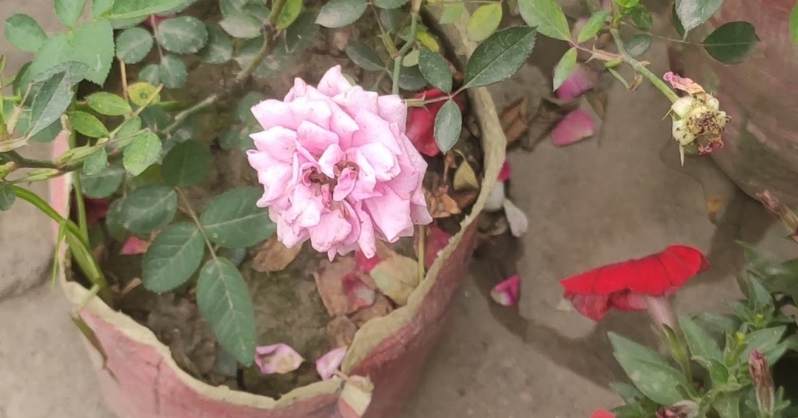
    The flower is a shrub plant that thrives in hedges with a height of about 1 to 2 meters. This rose is considered to be a wild flower, and that is why it is a bit rarer than regular roses. When it comes to the color of the petals, they can be anything from red to pink. A vibrant crimson is often seen in the Bengal rose. Sometimes they can also grow white petals. 

    Each flower has 5 petals, but in some cases, they might have 6. There are about 3 to 5 leaflets on each flower. The flower is not too big, just about 4-5 cm in diameter, but it can be bigger. It also forms kind of like a cup form. However, the cross-sectional shape can be shaped like anything amongst a circle, pear, or egg. 

    The length of the leaflets is about 3 to 6 cm, while the width sits anywhere between 1 to 3 cm. The leaves on this plant are divided pinnately, and their length can range from 12 cm up to 27 cm. The branches supporting everything have a unique bark with a purple to brown hue. Be careful when handling a Bengal Rose plant because the barks have some spikes that you don’t want to cut you. 

    Long stamens can be seen on the flowers, and there are a lot of them. There is also a decent amount of hair on this plant which is invisible even through the naked eye. 

    Lastly, Bengal roses produce red fruits anywhere between June to November, and they come in egg and pear-like shapes. 

    How to Grow Bengal Rose Flower

    Growing flower plants is something not everyone can do because they do need to take good care of the plant before the flowers begin to bloom. The same applies to Bengal Roses. However, these flowers do not require a large amount of maintenance since they grow on their own in the wild quite often. 

    Below, we are going to be discussing the amount of water, sunlight, and fertilizer this flowering plant will need to achieve full bloom. 

    The size of your pot should not be too large because that will be just unnecessary. A medium-sized pot, either made of plastic or clay, will do just fine. Like all other roses, the Bengal rose can also grow in bushes, so you can plant it outside in your garden as well. However, when you are planting it, you need to keep a few things in mind. 

    A very helpful tip would be to get your roses in small containers; it makes planting them much simpler. 

    These roses need a great amount of sunlight for about 6 to 8 hours of the day. If you are planting this flower inside, then your best bet would be to keep it on a West or East facing balcony. 

    However, the sunlight during the afternoon can be too harsh, which can scorch the petals of the rose.  So, you want it to be in an area with a lot of indirect sunlight. 

    Be ready to take a bucket of water to your Bengal Rose plant every two days. This plant needs quite a bit of water for its beautiful bloom. Don’t forget to water it or else the plant and flowers will start to wilt very quickly. 

    While this plant does need a lot of water, make sure you’re not overwatering it either because that can cause severe damage to it as well. Good soil drainage is also essential for the growth of Bengal Roses. 

    Maintenance Tips 

    How to care Bengal Rose Flower

    Maintaining the Bengal Rose is not particularly difficult, but it’s not the strongest plant either so it does require some care, as we have said before.

    Cut off bits of roots that have become rotten 

    While planting your Bengal Rose, you may see that some parts of the roots look discolored. The wise decision would be to carefully cut those parts so it doesn’t inhibit the growth of the flowers. 

    Slow-release fertilizer should be used from time to time

    Too much fertilizer can cause damage to the plant, but using slow-release fertilizer sparingly but routinely will give you the best yield of roses. The fertilizer should be used more during the growing season because then it will promote healthy growth. 

    Clean up your roses

    By ‘cleaning up’ here, we mean to remove any dead parts of the plant that looks unappealing. This can be anything from damaged wood, odd-looking stems, suckers, etc. 

    Different Ways you can Use the Bengal Rose.

    The Bengal Rose has great ornamental value with their beautiful colors, from a light pink to a deep crimson. There are several forms of this plant with slight variations, so it can be used for many different ornamental purposes. 

    Besides decorating, this flower can be used in some unique ways as well. The buds of Bengal roses and even the whole flowers can be boiled and used as a kitchen herb to cook dishes like soups. That is not the only edible part of the plant. The flesh around the seeds of this plant can be consumed after removing the seed hairs. 

    This flesh from the seeds provides beneficial nutrients like Vitamin E, and they are usually consumed by grounding them with flour. 

    https://youtu.be/BUjybQUGV-w

    Final Words

    Flowers are very fascinating things when you start taking a deeper look into them. The Bengal Rose is no exception. It is quite a unique rose, so you may not have seen it in real life before. However, you can try to find this Bengal beauty and add it to your garden, so your garden looks more unique!

    Related Posts:

    Purple Orchid Flower | Meaning, Origin, Uses & Propagation

    What Is Nardos Flower? Origin, Uses, Care & Facts

    5 Most Rare And Exotic African Flowers

    Leucophyllum Compacta: Overview, Uses & Care

    Resources:

    https://www.gardendesign.com/roses/care.html

    https://myplantin.com/plant/830

    https://en.wikipedia.org/wiki/Rosa_chinensis

    https://www.dummies.com/article/home-auto-hobbies/garden-green-living/gardening/general-gardening/how-to-take-care-of-roses-142980/

  • Do Plant Cells Have Centrosomes? A Detailed Answer

    Do Plant Cells Have Centrosomes? A Detailed Answer

    Plants are eukaryotic organisms that are made up of millions of cells. Every cell has a definite nucleus, a cell wall, and a lot of different organelles. Some of these organelles set plant cells apart from animal cells. On the other hand, there are some organelles that are only found in animal cells, and plant cells usually lack these organelles.

    Centrosomes are one of the most important organelles in a cell. But do plant cells have centrosomes? Or is it just exclusive to animal cells?

    Keep reading to find out everything about this unique organelle and whether plant cells possess this organelle.

    What is a centrosome, and what does it do?

    What is a centrosome, and what does it do

    A centrosome is a cytoplasmic organelle of a cell that resides in close proximity to the nucleus. During cell division, this organelle moves to the opposite poles of the cell to form a structure called the mitotic spindle. Centrosome plays an active role in mitosis cell division and influences the advancement of the cell cycle. Besides, it also has a positive effect on accumulating microtubules. By organizing microtubules, centrosomes play a role in coordinating the motility and adhesion within cells.

    Centrosome also has active responsibilities in conducting embryogenesis and locomotion within the cell. Cell division cannot proceed completely without the help of a centrosome. It has distinct roles in each phase of the cell cycle. 

    On the other hand, an uncontrolled number of centrosomes in the cell may precipitate an abnormal cell division, leading to production of cancer cells. This is why centrosomes have a crucial role in the cell cycle. Irregularity in centrosome number and function also causes genomic instability to some extent.

    Are Centrosomes Present in Plant Cells?

    Do plant cells have centrosomes

    Although centrosomes are important organelles for cell division, they are only found in animal cells. Plant cells lack centrosomes, but they can take part in cell division in a different way.

    Although there are no centrosomes in plant cells, the spindle formation in plants takes place through the microtubules arranged by the rigid cell wall. The microtubule organizing region in plant cells undergoes polarization in the metaphase stage of cell division. In this way, cell division is actively conducted in plant cells even without the help of centrosomes.

    Besides, there are specific enzymes within the plant cells that are responsible for the separation of the chromosomes during the anaphase stage of mitosis cell division. The combination of microtubule-organizing regions and these specific enzymes makes cell division take place smoothly despite lacking centrosomes or centrioles in plant cells.

    Motor proteins like γ-tubulin ring complex in plants also facilitate the cell division process in plants by allowing the formation of microtubules in different regions. In the absence of centrosomes, directional mitosis takes place in plants through the reorganization of microtubules. Besides, actin filaments and phragmoplast of microtubules also play a role in the progression of cell cycle and cell division in plants.

    With so many interesting features, plant cells face no difficulty in taking part in cell division. 

    What is its role in cell division?

    centrosome role in cell division

    The centrosome is a non-membrane bound organelle that has an important role in cell division. Especially in animal cells, cell division may fail to exist without the presence of centrosomes. Animal cells do not possess protein complexes or self-organizing microtubules like plants to facilitate cell division. So, animal cells have to depend solely on centrosomes to execute cell division smoothly.

    The main role of the centrosome is to help in the formation of the mitotic spindle that plays an active function in mitosis cell division. It also helps to maintain the constant chromosome number during cell division. 

    Besides, centrosomes are involved in controlling the movement of different cytoskeletal structures, including microtubules. They have an additional role in modifying the different membranes of animal cells, including cell membranes through phagocytosis.

    Two perpendicular centrioles form a centrosome in an animal cell. One of them is a mother centriole, and the other one is a daughter centriole. Both the mother and daughter centriole are arranged in an orthogonal configuration. There are different protein complexes within the centrosome and a matrix surrounding it. The matrix is known as pericentriolar material. During cell division, the centrosome from the parent cell is segregated to the daughter cell. These centrosomes take part in the formation of the mitotic spindle.

    Centrosomes also play a role in the organization of aster rays in the interphase stage pf the cell cycle. Aster rays have a notable effect on the polarity and adhesion of the cells.

    Besides, centrosomes can direct the cellular protein traffic and nucleate the microtubules. However, this nucleation process depends on the movement of the associated protein and the polarity. 

    The function of the centrosome can be controlled in different phases of the cell cycle according to motility, adhesion, signaling, and polarity. It also coordinates the protein trafficking and organizing of the microtubules. In this way, centrosomes in animal cells play a vital role in the cell cycle.

    How many centrosomes are in a cell?

    How many centrosomes are in a cell

    Animal cells contain two centrosomes. These two centrosomes move to two opposite poles during cell division. Later, a spindle is formed between the two centrosomes that assist in transferring the replicated chromosomes to the respective daughter cells.

    So, two centrosomes in an animal cell take an active part in duplicating and assisting in mitosis cell division.

    When do centrosomes replicate?

    Replication of centrosomes takes place during the S phase of the cell cycle. Centrosomes replicate once in each cell cycle. The result is the separation of two centrosomes in each daughter cell which move to two separate poles to form mitotic spindle. The division of centrosomes in a cell cycle is exactly similar to the division of DNA. Centrosomes also anchor the microtubules and shape the microtubule cytoskeleton system.

    Conclusion

    Bringing the discussion to the end, it can be said that although centrosomes are necessary organelles for cell division, plants lack this organelle. Even though centrosomes are absent in plants, cell division can still occur smoothly in plants. With the help of complex proteins and an organized microtubule system, cell division can still take place in plants without a centrosome. 

    Related Posts:

    Do Plant Cells Have Flagella for Movement? Learn the Facts

    Do Plant Cells Have Peroxisomes? A Complete Analysis

    Do Plant Cells Have A Permanent Vacuole? Learn About Its Role Here

    Do Plant Cells Have Cytoskeleton? Functions & Structure

    Are Plants Sentient? An In-Depth Analysis

  • Euphorbia Briar Patch: A Complete Guide

    Euphorbia Briar Patch: A Complete Guide

    The Euphorbia genus is very large and encompasses many species. As a result, it’s not uncommon for a certain species or two to go fly under the radar for many people. One such species is the Euphorbia briar patch.

    In this article, I’ll primarily be talking about the Euphorbia briar patch species. This article will include the characteristics and use of this species and, finally the conditions you need to properly grow it should you wish to.

    What Is Euphorbia Briar Patch?

    What Is Euphorbia Briar Patch

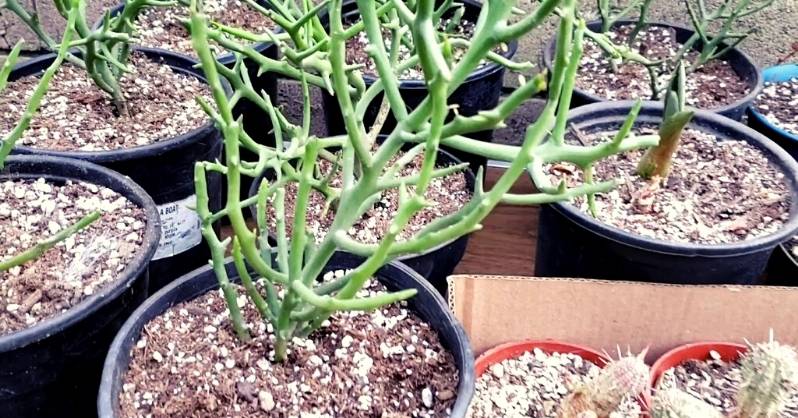
    Euphorbia briar patch is a hybrid species born of two other euphorbia species. Though they are from Africa, they can be grown in other parts of the planet, provided the areas meet their growing conditions.  They are succulent plants which refer to them having thick parts that help prevent water loss.

    The Latin or scientific name for this species is Euphorbia (tirucalli x stenoclada). This refers to its status as a hybrid species, and the two names refer to its parent plants.

    Characteristics Of Euphorbia Briar Patch

    Characteristics Of Euphorbia Briar Patch

    Euphorbia briar patch is a small shrub-like plant that can grow into a 3-meter-tall tree. It prefers tropical climates with a hint of dryness. Africa in general, is a great place for them to grow due to their climate and temperature being preferable.

    Despite preferring tropical climates, the briar patch does not handle too much dry weather very well. It does not have the best means of retaining water and, as a result, cannot handle dry spells for very long. They also don’t take well to cold or frost. So they are impossible to grow in colder climates or colder areas.

    Euphorbia Briar Patch does not prefer soggy soil. Moist soil can often have too much water for the plant to absorb, and this over-exposure to water can cause wood rot. As a result, your plant can quickly die from the wood rot.

    As you can see, Euphorbia Briar Patch is a sensitive plant that needs a good deal of care for it to bloom perfectly.

    What Are The Uses Of It?

    Euphorbia Briar Patch is primarily used as a house plant and sometimes as a garden plant. It has a unique look that often people describe as “coral in a pot,” so, despite some of the difficulties in raising them, they see them used as house plants. They can be placed near windows as they prefer the sun.

    How To Care For Your Euphorbia Briar Patch?

    How To Care For Your Euphorbia Briar Patch

    To properly care for your Euphorbia Briar Patch, you will need to make sure you have the proper conditions to ensure its growth. I’ll guide you on the conditions one by one:

    The Briar patch prefers tropical climates but can survive in temperate climates, albeit with some difficulty. The exact temperatures needed often vary, but on average, 18 to 20 degrees Celsius temperatures will suffice. They bloom during summer.

    This species of Euphorbia prefers normal humidity. High humidity or soggy weather can hinder the plant’s ability to grow as it won’t be able to absorb enough water. As a result, excess water can build up and cause parts of the plant to start rotting.

    On the other hand, too low of humidity can make it very tough to grow. Very dry weather is not at all preferred for them as they have a tough time dealing with it.

    Also, Euphorbia briar patch requires a good deal of watering. As it has been mentioned, they don’t handle dry weather or spells very well, and one of the main causes of declining health for them is lack of watering. In general, you will want to perform watering weekly, especially during summer. You can reduce the watering amount if your area experiences rain and your plant is exposed to it.

    However, in the case of rain, it is important to check the water level in the soil. Too much rain can cause the soil to get waterlogged, and the soil in the pot won’t be able to absorb all the water. There will be a good deal of water left on the surface. If it isn’t removed, it can cause the plant to rot, so be sure to check the water in the soil from time to time.

    Regular soil is often enough for this species. Neutral or slightly acidic soil (a pH rating from 6.0-8.0) is usually recommended. The main thing you need to worry about when considering soil is making sure you either drain the water or have a means of removing water from the soil.

    Water getting clogged will cause the plant to decay. Terracotta pots are recommended since they can absorb some of the moisture and, over time, help to drain the water from the soil.

    Euphorbia briar patch prefers sunlight. You will mostly see the plant being placed near windows during winter to gain as much sunlight as it can. Sometimes during summer, some shade is used in the case of excessive sunlight, although it is not a huge problem for it.

    How To Propagate A Euphorbia Briar Patch?

    How To Propagate A Euphorbia Briar Patch

    For propagation of this species, you will need to grow them from seeds during the summer. This can be difficult and might not always succeed, so be prepared for that. The basic process is to obtain a sapling from a grown plant and cultivate it in root hormone. Then ensure moist conditions and monitor the growth to see if the propagation is successful or not.

    Conclusion

    While it can be a bit daunting to grow briar patches in your house, with time and some guidance, you’ll be able to properly take care of them in no time. Alongside these tips, make sure to be on the lookout for rare pests in your garden.

    Read More: Bengal Rose: Learn Everything About the Mysterious Flower

    Read More: Piper Crocatum | Uses, Origin & Propagation

  • Red Orchid: All You Need to Know About the Fascinating Flower      

    Red Orchid: All You Need to Know About the Fascinating Flower      

    Orchid flowers are quite beautiful, and they have many species such as blue orchids, white orchids, and red orchids. Some of these species are used as house plants. Out of the species, red orchid flowers often stand out and are a popular pick. They often have cultural significance.

    In this article, I’ll be talking about the red orchid flower- their meaning and significance, as well as how to grow them properly. I’ll also be discussing the benefits and uses of keeping orchid flowers.

    3 Orchids That Are Of Red Colour

    3 Orchids That Are Of Red Colour

    There are several species of orchids that are either red or burgundy. I’ll be talking about three particularly common species. However, outside of these three, there are many more red or burgundy orchid species available due to how huge the orchid family is.

    The three Orchids we’ll be talking about include:

    • Cymbidium
    • Phalaenopsis
    • Dendrobium

    Cymbidium

    Alternatively, they are known as boat orchids. Cymbidium is characterized by its large leaves on its pseudobulb. There are usually three leaves for most cymbidium variants, and they feature thin stems.

    Some hybrids of cymbidium possess a bright red shade or a burgundy shade. These hybrid variants include Cymbidium bicolor and Cymbidium aloifolium. Bicolor can be found in many Asian countries such as China, Vietnam, and the Philippines. Aloifolium can be found in Hong Kong and Thailand.

    Cymbidium has a long history in horticulture, dating back to ancient China. This was because of how easy it was to raise Cymbidium, and they remain popular to this day. They are not demanding and aren’t as susceptible to pests and diseases compared to other variants.

    Phalaenopsis

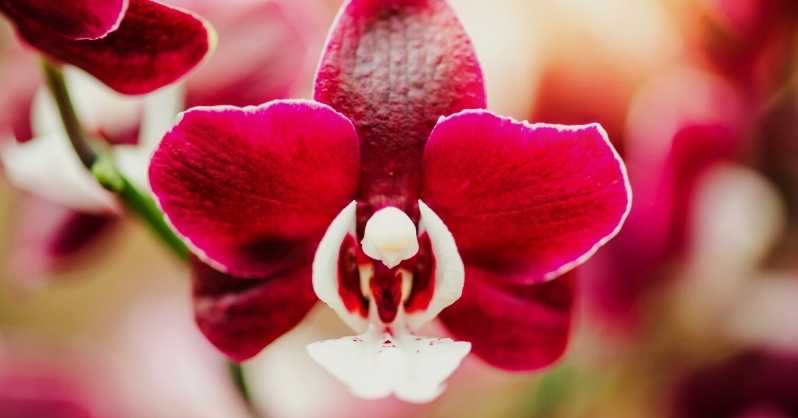
    Found in mostly China and India, the Phalaenopsis or moth orchids have red to pinkish variants. Their leaves are quite large compared to their shorter stems and often have a leather feel when touching them.

    Similar to the previous species, they are popular indoor plants. However, they are slightly more difficult to raise than Cymbidium.

    Some variants of this flower are endangered, and protective measures are being taken in some places to ensure that they do not go extinct. Their pollination and propagation depend heavily on bees.

    Dendrobium

    Dendrobium is a large populating species that can be found in many areas such as China, Japan, India, and Australia. They are used as both house and decorative plants, with some variants seeing use in medicine due to their healing properties.

    While they generally have a pinkish hue, red-colored versions of Dendrobium do exist. They are characterized by their tuft of leaves and cylindrical roots. They are quite adaptive and, as a result, grow in both cold and dry environments ranging from mountaintops to even some deserts.

    Dendrobium orchids have been featured in many symbols across the world, primarily in Australia and Singapore.

    Red Orchid Flower Meaning

    Red Orchid Flower Meaning

    Over time, certain flowers have had meanings attached to them. In general, orchids signify love and beauty. This is due to their exotic appearance and how they appear in various hues. Orchids stand out a lot in many gardens due to their unique look.

    In addition to that, red orchids have a deeper meaning. Red orchids are considered symbols of determination and perseverance. The red signifies courage in the face of adversity. Alternatively, they can also be considered symbols of love, but white orchids tend to be better known as that.

    Red orchids get gifted to people during trying times and are often seen as a very personal gift. This is to encourage them not to give up and continue on their path.

    Significance Of The Red Orchid Flower In Chinese Culture

    Orchids are held in high regard in Chinese culture and are often associated with the Chinese thinker Confucius, especially the cymbidium variant. Confucius refers to the ability of the orchid flower to grow in a multitude of different regions and areas. Orchid flowers are usually seen as a symbol of beauty, elegance, and admiration in China.

    They are less seen as a symbol of love and are often given strictly to friends or colleagues. This shows a great deal of respect or admiration towards the recipient. Red orchid flowers, particularly the cymbidium, are also seen as symbols of great friendship, whereas Confucius refers to being surrounded by the good company to be akin to an orchid patch.

    Red Orchid Flower Care

    One of the main reasons why orchids see used as house plants is simply because of how easy it is to take care of them. You only need to keep in mind a few things to ensure proper growth.

    Orchids require a decent amount of water. Watering them weekly will prove sufficient unless it is extremely hot and dry where you live.

    You will usually want orchids to face towards windows since they prefer sunlight. However, if your area experiences harsh sunlight, leaves can get burnt. As a result, you will want to provide some shade to reduce the amount of incoming sunlight towards the plant.

    You will want well-drained soil. While orchids do prefer ample water, too much water can hamper growth instead. Ensuring the soil is well-drained will prevent water from clogging up and won’t result in any plant decay.

    Temperatures of 15 degrees Celsius are adequate for orchid flowers. To ensure they bloom properly, temperature control is important, and you will want cooler temperatures during the night. They also appreciate humidity, so for indoors, consider using a humidifier to achieve sufficient humidity levels inside the house.

    Benefits Of Orchid For Skin

    The orchid extract can be used as a skincare product. Alongside being able to reduce lines and wrinkles, it has anti-oxidant properties, so it can reduce the chances of skin cancer. Additionally, they can moisturize the skin. Overall, the orchid extract is incredibly beneficial for the skin, and there are many more benefits that are being looked into as of now.

    Conclusion

    Red orchid flowers are quite interesting, and I hope this article has taught you more about them. They are very easy to raise, so consider adding them to your home to spruce it up.

    Related Posts:

    Bengal Rose: Learn Everything About the Mysterious Flower

    Naked Man Orchid | Origin, Uses & Propagation

    Purple Orchid Flower | Meaning, Origin, Uses & Propagation

    5 Most Rare And Exotic African Flowers

    What Is Azucena Flower? Origin, Uses, Care & Facts

    Article Sources:

  • Blue Orchid: Everything About the Exotic Flower

    Blue Orchid: Everything About the Exotic Flower

    If you do some research about orchids, you will get to know that there are 25,000 different types of them! These flowers vary in many ways in their appearance, and you may also know that there are many different colors of orchids that are available.

    While white, pink, and red orchids are the most commonly seen ones, blue orchid flowers are more of a rarity. When you think of blue orchids, you might be met with a great number of questions such as, are they natural? How many types are there? Etc. Today must be a good day for you because we will be answering all the questions you could have about blue orchids.

    What is the Blue Orchid Flower?

    Orchids are very popular flowers, and they are used on various occasions. Their color plays a large role in determining where they are used and what they are used for. Unlike white orchid flowers, Blue is a very rare color in nature, and it is seen even less in flowers. Hence, blue orchids are considered to be very valuable flowers.

    Although orchids have been around for hundreds of millions of years, and they were discovered about 4000 years ago, you could say that blue orchids are more of a recent discovery.

    William Griffith, who was a botanist, was the first person to discover beautiful blue orchids in 1837. These wonderful flowers were found in Northeastern India, more specifically in the Khasia Hills of Assam. However, the botanist tried to transport the blue orchids to England, but they died at that time.

    What Does It Symbolize?

    What Does the Blue Orchid Symbolize

    Orchids can mean symbolize different things depending on their color. When you are gifting someone orchids, you want to choose the right color, so you can pass an accurate and wonderful message to the recipient.

    While Orchids are popular, they are not the most common type of flower. Moreover, as blue is so rare in nature, blue orchids are considered to be even more of a rarity. That is why blue orchids symbolize uniqueness, as well as rarity.

    If the giver is well-aware of the meaning behind this flower, then they are trying to tell the recipient that they are one of a kind. Additionally, blue orchids can also symbolize hope, eternal peace, and luxury. Blue orchids are not very common gifts because they are very hard to find sometimes, and can also be costly.

    Keeping blue orchids around your space could you help you attain a bit of peace if you are stressed because that is what they represent, and their appearance is truly a wonderful sight.

    Is it Possible to Grow It Naturally?

    Because of its unique color, people often assume that blue orchids are made only artificially. But is that true? The answer is both a yes and a no. So, blue orchids do grow naturally, yes, but most of the blue orchids that you see in shops are usually artificially dyed.

    The reason why natural blue orchids are not that available is that they are seen quite rarely in the wild. Hence, their cost is also high, which encourages florists to make them artificially. So, yes, most of the blue orchids you see in the stores are real orchids, but they are just dyed blue.

    Natural Blue Orchids You Can Grow

    After saying all that, we must come back to the point that there are still a few orchids that have the natural blue gene, and they are Boella Coelestis, Thelymitra Crinite, and Blue Vanda. We will be talking about each of these natural blue orchids, in brief, so you can see which one you like the most. So, then maybe you can choose to grow one!

    Boella Coelestis

    Boella Coelestis or natural blue orchid

    You could say that the Boella Coelestis is close to what would be called a natural blue orchid, but the petals are more of a shade of violet. You can also see that the petals on this flower have white tips, and the inner portion of it is often lavender. A vibrant yellow crest can also be seen on the lip of the flower.

    The size of this flower is about 3 and a half inches, so it’s neither small nor large, and the petals are arranged in a fan shape. The Boella Coelestis is held by light green foot-long leaves, which make the color of the flower pop even more. This type of orchid is native to Colombia and Ecuador and can be grown in both warm and cool climates.

    Thelymitra Crinite

    Thelymitra Crinite

    The Thelymitra Crinite is a very rare flower, and you can think of it as the true blue orchid. This flower goes by many names, including queen orchid, lily orchid, and blue lady orchid.

    This flower is a perennial herb and has one dark green leaf with it, which can be anywhere from 2 to 6 inches in length. The flower is about small to medium-sized, with the petals being about 0.6 to 0.9 inches in length and 0.2 to 0.4 inches in width.

    What stands out the most is the eye-striking blue color of the petals; it is truly a rarity in nature. The shade of blue can vary between a paler and a more vibrant color. Thelymitra Crinites have a blue column which also has a yellow crest. That is not the only yellow thing they have; the anther of this flower is covered completely with tiny yellow glands.

    Blue Vanda

    Blue Vanda blue orchid

    Amongst natural blue orchids, the Blue Vanda is seen more often. This is the blue orchid species that William Griffith had found all the way back in 1837 in Assam. You may know this flower by the name autumn lady’s tresses or vanda coerulea.

    Although this flower is the most common natural blue orchid, its petals are not exactly a true blue color. The color can be described as a bluish lilac color. They bloom in a fan shape with their 5 petals. This flower is still native to the Northeastern part of India, but it is also grown in abundance in Southern Yunnan, China.

    How to Make Your Orchids Blue Artificially

    As we have said in our previous sections, most of the blue orchids that you see in the market are artificially dyed and are not natural blue orchids. Most of the time, florists get phalaenopsis orchids which are easy to find, and then they dye them blue.

    So, how are these orchids artificially turned blue? There are a few methods, and we will be talking about 2 of them in our article.

    Injecting the Dye

    First of all, you can inject blue water-soluble dye such as food coloring into the stem of the orchids. Then you will have to place the flowers in a container with water.

    As the plant causes the uptake of water, the blue dye will be transported to the petals, and after waiting for some time, your white orchid should now look like a rare blue orchid.

    Placing White Orchids in a Solution of Blue Food Dye

    In a vase, pour in some lukewarm water, and then add your required amount of blue food dye. The measurement is that for each cup of water that you add, you will need about 50 drops of blue food dye.

    Cut your white orchids’ stems in a slant direction, and then place them in the solution and wait. You will just need to wait around for some time, and then your white orchids will be artificially blue!

    What are the Uses of the Blue Orchid Flower?

    Since blue orchids are such beautiful flowers to look at, it is a must to use them for decorative purposes. You can try to include them in your garden to beautify your home, or you can put them in an elegant vase and place it in your living room to add a pop of color.

    Besides its aesthetics, natural blue orchids actually have a few other good uses. The Blue Vanda, which we have discussed above, has some medicinal uses. The liquid extracted from this flower can be used to make eye drops which have proved to be useful in helping with cataracts, glaucoma, and even blindness!

    Oil from some blue orchids can be beneficial for the skin. Blue orchid oil can be used to hydrate and bring back the radiance to dry skin.

    Maintenance Tips

    Maintenance Tips for Blue Orchid

    If you are planning to grow blue orchids in your home, then you don’t need to worry very much about maintenance because they are tough plants. However, this doesn’t mean that they don’t need proper care.

    Keep your blue orchid plant in a place with bright but indirect light from the sun, so a South or East facing window would be a good place to keep it close to. Water them once every week, and try to keep the air humid. Getting a humidifier can help you maintain the humidity at 60 to 70%, which is great for the flower’s growth.

    Add fertilizer to your potting mixture once every two weeks when the plant is showing new growth, but as the plant gets older, fertilize it every two months.

    For those of you who will be just keeping their orchids in a vase, there’s not much you can do. Just make sure they get some light and change the water every other day.

    Where Can I Buy It?

    The answer to this question depends greatly on one factor: do you want natural or artificially dyed blue orchids? If you are fine with the former option, then you will be pleased to hear that you will find them in almost any big flower shop.

    However, it will be very challenging to find natural blue orchids like Thelymitra Crinites. You will have to contact special vendors who grow these flowers. People residing in Australia or the Northeast of India will find it easier to get their hands on the natural ones.

    Natural blue orchids are extremely expensive in comparison to artificial ones, but they are also more beautiful.

    Interesting Facts You Should Know

    • Blue Orchids were first discovered in 1837 in Northeast India by the botanist called William Griffith.
    • A blue orchid plant may be able to survive up to a whole century.
    • They have very small seeds, which can make cultivation difficult.
    • Once a blue orchid plant has enough blooms, it will hang and grow upside down.
    • It may take up to 7 years for the first flowers to grow after orchid seeds have germinated.
    • There are only mainly 3 types of naturally blue orchids, regardless of there being over 25,000 documented species of orchids in the world!

    Common Issues To Be Aware Of

    There are no major issues with the blue orchid flower or growing them. However, we would like to discuss a few things that you may want to know if you want to get blue orchids.

    Struggle to find a Real Blue Orchid

    Unfortunately, it is very common for vendors to sell artificially dyed blue orchids at a very high price by saying they are natural. Upon close examination, you should be able to tell which one is fake because the coloring on the artificially dyed one will not be uniform.

    Tend to be Very Expensive

    Since natural blue orchids are very rare, they are also quite pricey. If you want to buy a bunch of real blue orchids, then you will definitely be making your wallet a tad bit lighter.

    Waiting for the Flowers to Grow

    If you decide to grow blue orchids, then be prepared to be very patient because once your blue orchid seeds have germinated, it can take about 5 – 7 years for the first flowers to even show.

    https://www.youtube.com/watch?v=yVEls5kVJ6U

    What Are Some Creative Uses for the Blue Orchid Flower?

    There are many ways how you can use blue orchid flowers besides leaving them in a vase.

    • Make floral ornaments with them. The unique blue color will definitely be an eye-catcher whether you use it in making earrings, a bracelet, or even a necklace.
    • Use it to make a floral curtain for special events, but that would be one expensive curtain.
    • Decorating a wedding stage with blue orchid floral arrangements.
    • Juice of the Blue Vanda can be used to make a very potent eye drop.

    Conclusion

    Blue orchid flowers are truly one-of-a-kind flowers, and if someone gives you a bouquet of them, you should know that they are also signifying that you are a unique person.

    Not many people have seen natural blue orchids because of how rare they are. So, if you have the opportunity and can afford to get them, do not miss out. If you are getting artificially dyed blue orchids, that is also great because all of them are just beautiful!

    Related Posts:

    White Orchid: Learn Everything About the Elegant and Mysterious Flowers

    Red Orchid: All You Need to Know About the Fascinating Flower  

    Naked Man Orchid | Origin, Uses & Propagation

    Purple Orchid Flower | Meaning, Origin, Uses & Propagation

    What Is Azucena Flower? Origin, Uses, Care & Facts

  • White Orchid: Learn Everything About the Elegant and Mysterious Flowers

    White Orchid: Learn Everything About the Elegant and Mysterious Flowers

    Flowers are arguably one of the most beautiful things in the world. They are so beautiful that they are usually involved in every large event in our lives, from funerals to weddings. Orchids are particularly very popular, and if you know a thing or two about them, you must have seen that they are sold in different colors.

    However, today our primary focus will be white orchid flowers. We will be talking about the meaning and value that this flower holds as well as ways on how you can grow this wonderful white flower! Keep reading to know more about white orchid flowers!

    What is White Orchid Flower?

    What is White Orchid Flower

    White orchids are not rare flowers unlike blue orchid flowers. They are made readily available by florists because of their high demand, so we are sure you have seen them before. Common white orchid flowers also go by the name phalaenopsis orchids. While there are many types of orchids in the world, this variation is by far the most popular, and rightfully so.

    Phalaenopsis orchids are often white, but they also come in different colors. Another common name for them would be moth orchids, and the abbreviation for this flower is Phal. They come from the Orchidaceae family, and their subfamily is called Epidendroideae.

    White orchids also have hundreds of tribes, but Phalaenopsis orchids, which is the most popular type, are from the Vandeae tribe. Most white orchids grow in a single direction and have one stem. So, most of them are monopodial. Some other common orchids are Cymbidium white and yellow overnight orchids and Dendrobium White orchids.

    As you can tell from the name, the Cymbidium white and yellow overnight orchid does have a slight yellow to it, but it is quite subtle, so looks quite pretty. If you are looking for the whitest orchid, then the Dendrobium white orchid would be a great option for you to consider.

    Orchids have been around for thousands of years, and humans have been using them for different purposes. Yes, you read that right, THOUSANDS! These flowers were first mentioned somewhere around 300 B.C. The Chinese were the first to cultivate orchids approximately 4,000 years ago.

    However, after doing some research, scientists have concluded that the origin of this flower dates back to 120 MILLION years ago!

    The Meaning

    The Meaning of White Orchid Flower

    You may be surprised to know that there is a lot of meaning behind the white orchid flower, and it represents many things. While orchids come in various colors, the pristine white color allows you to appreciate the beauty of the flower completely and not be overwhelmed by the color itself.

    This white color represents many things, and among them, purity stands out the most. The white colors, along with the flower’s lovely structure, look simple yet lovely and elegant. This beauty in the simplicity of the flower represents innocence and purity. White orchids are also often associated with beauty and humility.

    You may have come across the phrase ‘the wisdom of the white orchid’ once or twice in your life. This phrase emphasizes the thought that these flowers bring wisdom to our world by making our souls purer. A lot of people consider white orchid flowers to be one of the most beautiful flowers in the world because of their wonderful meaning.

    Are White Orchids Natural?

    Orchids come in a variety of colors, but the truth is sometimes they are not natural. The flower plants’ stems are placed in a concentrated dye solution, and the dye then travels up to the petals and changes their color.

    Hearing this might lead you to wonder whether white orchids are natural. White orchids are natural flowers, and as we have said, they have been around for millions and millions of years.

    Although there are many types of white orchids that you may find, the most common three, as we have mentioned before, are Phalaenopsis orchids, Cymbidium white and yellow overnight orchids, and Dendrobium White orchids. No one makes artificial white orchids because, considering how easy it is to naturally grow them, there is no logic behind it.

    How Can You Grow It?

    How Can You Grow White Orchid Flowers

    Regardless of looking very pristine and delicate, these flowers are quite sturdy, which is why they are not very difficult to grow. They bloom all year round and are found on every continent besides Antarctica, where the weather is freezing cold.

    Since Phalaenopsis orchids are the most popular type, we will give our advice to you in regards to that you will also be planting them. However, the following advice can be applied to other types of orchids as well.

    Step 1: Remove the Orchid plant from the pot you bought it in

    Most people buy their orchid plants from a store, and they usually come in a very small plastic pot. Therefore, you will most probably be re-potting it. When you are removing the plant from its original pot, be careful so you don’t damage it in any way. Try your best to get rid of the moss that may be on the plant.

    Once you have removed the plant, you should see sturdy-looking white roots. Take a good look at the roots, and if you see any rotten parts that have blackened, make sure to snip them off with a pair of scissors.

    Step 2: Re-pot the Plant

     We actually would suggest you keep your orchid plant in a plastic pot because if you decide to change its pots again, then removing it will be much easier. Place the plant in the partially soil-covered pot, and then fill it up with soil.

    The orchid plant should feel sturdy but not completely anchored. You don’t have to worry about that because as the roots grow, they will anchor the plant. After that, all you have to do is take good care of the plant so that orchids bloom.

    Step 3: Place the Orchid plant in a Well-lit Spot and Water it Routinely

    Orchids bloom well in brightly light spots, but extremely aggressive sunlight is not suitable. Hence, it would be recommended to place the orchid plant near an east-facing window.

    This plant can handle drought much better than you would expect, so underwatering would not be the biggest concern. Instead, overwatering it would cause its roots to rot quickly and would stop the plant’s growth.

    You should be watering your orchid plant once a week so that the soil is moist and the orchids thrive properly.

    How to Care for the Flower

    How to Care White Orchid Flowers

    Now that you know how to grow white orchids, it’s time for you to know how to take care of them, so they bloom year after year. We will be giving you some general tips in this section that can be applied to all types of white orchids.

    Keep it in a Brightly Lit Spot.

    We’ve said this before in the previous section, but a bright environment is essential for the growth of white orchids. Keep them near East facing windows, and you should be fine. Remember to keep them out of harsh lighting because that can damage the flowers.

    Water them Once every Week

    Orchid plants do not need to be watered a lot, and watering them too much can cause their roots to rot. So, sparingly watering them once every week is perfect.

    Try to Keep the Environment Humid

    It turns out that orchids grow the best in humidity levels from 60 – 80%. So, if you live in a place where the air is dry, consider getting a humidifier. The humidifier will be great for the plant, especially in winter because that is when the humidity levels usually fall the most.

    Change the Pot and Potting Mixture Every Other Year

    You don’t have to get a huge pot for your white orchid plant, just make sure it’s a decent size, and if it’s plastic then it’s even better. Use a potting mixture that is manufactured for orchids, or else you won’t get the beautiful bloom you want.

    Make sure to re-pot your orchid every other year along with the potting mix, so the plant blooms for several years.

    Occasions where you can Give White Orchids as Gifts

    There is a lot of symbolism that goes behind gifting someone white orchids. The gift-giver is showing affection and admiration for the gift recipient as they give them these flowers. It also means that you are wishing them peace and love and are showing them your pure intentions.

    Oftentimes, white orchids are given to people outside of a romantic relationship. You may give them to your friends or family members as a token of admiration as well.

    Because this flower has such a deep and lovely meaning, they are often used in wedding decorations. They show a sign of sophistication, and more importantly, they represent the purity, beauty, and harmony of souls.

    Why do People Like White Orchids?

    After reading so much about white orchids, this answer should be partially answered for you. Most certainly, people appreciate the beauty of simplicity that white orchids hold. If you have a bunch of blooming white orchids in your room, it will elevate the aesthetics of the place.

    However, people like this flower more for the symbolism behind it. When someone is giving you white orchids, and as the recipient, if you know the meaning behind it, you will feel good when you get them because you will know the giver admires you.

    Conclusion

    As we conclude, we must agree with the statement that white orchid flowers are one of the most beautiful flowers in the world. Everything about it, starting from its appearance to its meaning, holds so much beauty.

    We hope you have found our tips on how to grow orchids useful, so now you can make your house more beautiful with your own orchids. Since you know so much about this flower now, we hope you understand what it means the next time someone gives you white orchids!

    Related Posts:

    What Is Nardos Flower? Origin, Uses, Care & Facts

    White Orchid: Learn Everything About the Elegant and Mysterious Flowers

    Blue Orchid: Everything About the Exotic Flower

    Red Orchid: All You Need to Know About the Fascinating Flower 

    Naked Man Orchid | Origin, Uses & Propagation

    Sources for the Article:

    https://www.verdissimo.com/en/news/the-wisdom-of-the-white-orchid

    https://orchidrepublic.com/blogs/news/top-10-types-white-flowers

    https://orchidrepublic.com/blogs/about-orchids/phalaenopsis-orchid

    https://www.gardeners.com/how-to/growing-orchids/5072.html

    https://www.thespruce.com/grow-orchids-indoors-1902818

  • What Is Nardos Flower? Origin, Uses, Care & Facts

    What Is Nardos Flower? Origin, Uses, Care & Facts

    Nardos flowers, commonly known as Tuberose, are very commonly found. They’re also one of the most widely used flowers in making bouquets. Sadly, despite their popularity, most people don’t know them well.

    In this article, we’ll discuss the morphology, history, and key facts about Nardos flowers. We’ll also discuss how you can grow and use these flowers. So, let’s get started!

    What Is Nardos Flower?

    What Is Nardos Flower

    Scientifically known as Polianthes tuberosa, the Nardos is a very beautiful flower. Although it’s called Tuberose commonly, it’s also called by beautiful names such as Nardo, Nardos, Amoles or Vara de San Jose, meaning St. Joseph’s staff. In South Asia, it’s called Rajanigandha, meaning “Fragrance of night”.

    The genus of this flower is Polianthes under the class Monocot, which in turn, falls under Amaryllidaceae.

    Although the plant can be up to a meter in height, certain variants are known to grow taller. Each stalk of Nardos comes with a cluster of flowers, and each flower can grow up to 30 cm in height. In some cases, the flowers grow as long as 45 cm. Nardos flowers can be either white or pink, depending on the sub-species.

    Where Does Nardos Flower Come From?

    These flowers originate from Mexico. These plants grow well in cool and tropical climates, and Mexico provides the perfect environment for them to grow.

    Other than Mexico, these flowers are known to grow well in the Indian sub-continent as well. Although the climate is a bit different than that of Mexico, it’s suitable enough for Nardos. Hence, this flower is abundantly used in these regions.

    How Can You Use the Nardos Flower?

    How Can You Use the Nardos Flower

    Nardos flowers are mainly used for decorative purposes. One of the prime features of these flowers is that they aren’t only pretty, but they have a beautiful scent as well. Due to their strong fragrance, they’re used for making perfume as well.

    One lesser-known side of this flower is its medicinal characteristics. It can help those afflicted by insomnia. Furthermore, it helps reduce stress. Consumption of Nardos is proven to be beneficial for the immune system, and it can also help with infections.

    Not only that, but these flowers are beneficial for reproductive health as well. Consumption of Nardo stem can reduce menstrual disorders. Furthermore, they are also great for fighting fungi.

    Despite these health benefits, it’s important to note that excessive use of these flowers can create adverse effects. So, they must be used or consumed in moderation if someone wishes to enjoy their health benefits.

    How To Grow Nardos Flower

    How To Grow and care and Nardos Flower

    Nardos flowers have high adaptability, and they can be grown equally well in tropical and cold climates. In this article, we’ll discuss all the factors that’ll help you grow Nardos flowers with the least hassle.

    Choose the Right Location

    Choose the Right Location for tuberose flower

    Nardos flowers are grown from their bulbs. To ensure the flower grows properly, you need to ensure an optimum environment for its growth. Start by picking the right location and season.

    As for choosing the right spot, you need to pick a space that gets adequate sun and has good soil for the development of roots. While you plant the bulbs, make sure there’s at least a 20cm gap between each of them.

    When to Plant?

    The best time for planting Nardos would be early spring. To be precise, the temperature must be warm when you plant the bulbs, and it’s best if the humidity ranges from 60% to 70%. If planted in early spring, you can see the flowers blooming in late spring.

    Soil Condition

    Nardos flowers aren’t particularly adaptive in terms of soil pH, so it’s best if the pH is kept at 7. Plus, the soil must have essential nutrients for the growth of the flowers. To ensure proper nutrition, you can fertilize the soil using organic fertilizer.

    Drainage System

    While Nardos flowers can grow without a perfect drainage system, it’s important to make sure water doesn’t stagnate on the bed. Accumulation of excess water will make the bed muddy, thus leading to root rot and bacterial and fungal growth.

    Fertilizer

    As we’ve discussed earlier, the soil must be fertilized for optimum growth of the Nardos flowers. To ensure proper fertilization, we highly recommend using the 8-8-8 fertilizer.

    These fertilizer packs come with equal parts of phosphorus, nitrogen, and potassium. This combination is very healthy for bulbous plants like Nardos. Moreover, you can ask the local nursery for fertilizers specially made for this kind of plant.

    You don’t have to fertilize these flowers regularly. Doing them once every six months will be more than enough.

    Prune Dead Stalks and Flowers

    If you ever come across a dead flower or stalk, we recommend pruning it instantly. Even if you find the stalk yellowing out, it’s recommended that you prune it. Pruning the dying or dead components will encourage healthy growth. This is especially true for the growing season.

    So, we recommend you get a set of scissors every morning and tend to the flowers. This will help you achieve a garden full of healthy Nardos flowers.

    Key Facts About Nardos Flower

    • These are perennial plants, which is why they’re highly preferred by people who’re looking for long-term plants.
    • These flowers can withstand down to -2 degrees Celsius, making them appropriate for cold climates as well.
    • These flowers can help with insomnia, stress, digestive problems, menstrual cramps, and much more.
    • Due to their strong fragrance, they’re often used for the preparation of perfume and fresheners.

    Conclusion

    Nardos flowers aren’t rare by any means, but the layers of benefit they offer isn’t common knowledge. Hopefully, this article provided all the information necessary to grow and care for Nardos flowers.

    Furthermore, we’ve also tried to delineate the benefits of these flowers and how you can use them. With this information at hand, we hope that you’ll be able to put these flowers to the best use!

    Related Posts:

    10 Examples of Flowering Plants

    What Is Azucena Flower? Origin, Uses, Care & Facts

    White Orchid: Learn Everything About the Elegant and Mysterious Flowers

    Blue Orchid: Everything About the Exotic Flower

    Red Orchid: All You Need to Know About the Fascinating Flower