Author: Mohammed Rujel

  • Arbutus Marina: Origin, Characteristics & Care

    Arbutus Marina: Origin, Characteristics & Care

    Today, we’ll learn about the wonderful Arbutus Marina tree. We’ll be looking at some of the characteristics, where you can find the tree as well as how to take care of it. If you’ve been curious about this tree, then you might find this article informative.

    What Is Arbutus Marina?

    What Is Arbutus Marina

    Arbutus Marina is a tree belonging to the Arbutus family of trees. Arbutus is the scientific name, and you might be more familiar with them as strawberry trees. They were discovered in 1917 and are often identifiable by their pink or red-hued flowers. They are considered garden trees due to their height and ease of growth.

    Where Is It Found Naturally?

    The Arbutus Marina originated first in Southern Europe. Now they are found primarily around the Mediterranean region and British islands. They can also be found in some nurseries in California and the western areas of the United States of America.

    Physical Characteristics 

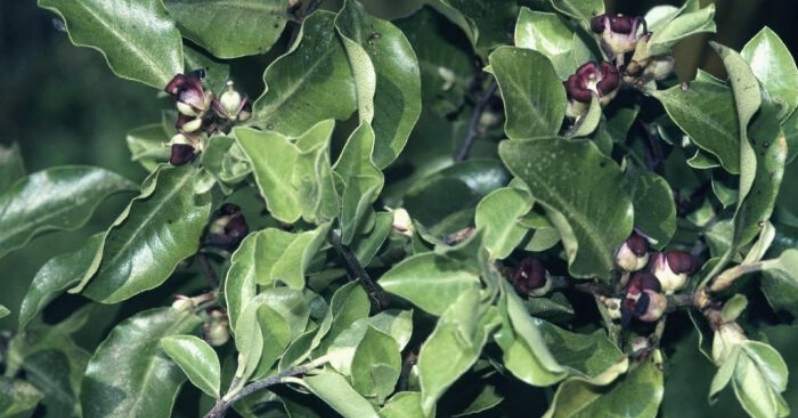
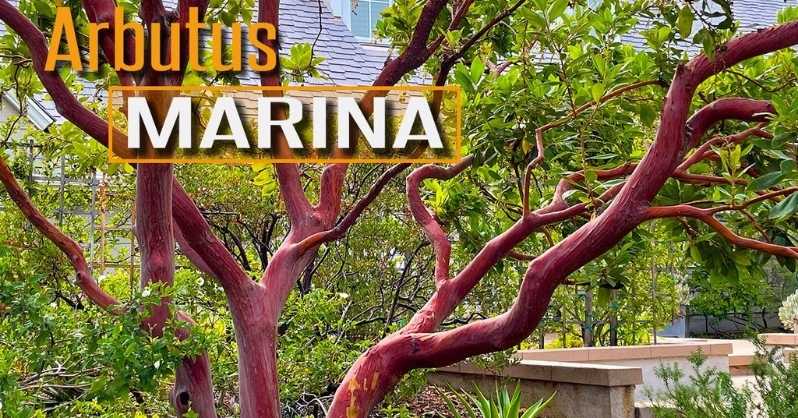
    The Arbutus Marina tree is considered an evergreen tree, and as a result, they retain its green leaves throughout the year, even during the winter. Fully grown Arbutus Marina trees can reach heights up to 50 feet. As it has been said before, bright red or pink flowers can bloom on the tree during Spring. They form a large and dense canopy when they fully mature.

    They have tough bark and are quite strong trees. Arbutus Marina trees can withstand dry spells, further adding to their strength. These trees can shed their bark over time which can reveal bark that is a beautiful shade of red. 

    These trees can also bear fruit. However, unlike strawberries, they aren’t as enjoyable to eat as they lack a sweet taste. The fruits are safe to eat, so you don’t have to worry about your pets or kids eating them. 

    What Kind Of Climate Does It Need To Survive?
    What Kind Of Climate Does It Need To Survive

    The Arbutus Marina is a hardy tree and can survive well in most climates unless it is extremely cold. They generally prefer cooler environments like that present in the British islands. However, once properly planted, they can better survive harsh changes in weather.

    Generally, temperate climates are what they prefer. You want to grow them during spring or summer so that they can grow and become stable by the time fall or winter arrives.

    Common Problems With The Plant

    common problems with arbutus marina

    For the most part, Arbutus Marina is easy enough to grow. However, it is not without some problems that you will need to tend to. These problems include:

    Pests And Fungus

    While the Arbutus Marina is a strong tree, it is not immune to pests. The pests that attack it are rarer variants, but if they are not taken care of can kill your plants. Aphids are ones that you need to be aware of for the most part, especially during the early stages of growth.

    A certain variant of fungus can be known to infect the Arbutus tree. This can cause the tree to decay over time. There is not much in the way of healing trees infected by this fungus other than separating infected parts and disposing of them.

    Messy

    Arbutus Marina trees can be messy. They can shed bark and twigs, which can result in the ground around them being full of stray wood. The fruits can also fall and be crushed, leading to a bigger mess. As a result, this can lead to extra maintenance on your part. 

    Another thing to note is that due to the large canopy of these types of trees, they can block off sunlight from other smaller plants, which can end up inhibiting their growth. Due to these, these trees can take up a lot of space in your garden leading you to properly plan around them.

    Wood Rot

    One thing that this tree is susceptible to is wood rot. When excess water is present around the tree, it can cause decay. This can lead to the tree getting sick and eventually dying off if water is not properly drained from time to time. 

    How To Propagate It?

    How To Propagate Arbutus Marina

    Arbutus plants can be propagated by taking cuttings of the tree or plant and then cultivating it. When taking a cut, make sure to make a slanted cut to increase the chances of cultivating it properly. They are generally easy enough to propagate. 

    Maintenance Tips

    Here are some tips to help grow your Arbutus trees properly. These tips are:

    • Create proper drainage channels. This will help remove water near the roots and prevent wood rot from occurring.
    • Do not plant the roots too deep or make use of compacted soil. This can promote a higher amount of water absorption by the roots, which can stunt growth.
    • Ensure full sunshine for the tree. Arbutus trees need to grow tall and strong so plant them in areas with little to no shade.
    • Take protective measures against pests and make sure to inspect for any fungal infections.

    How Is It Used?

    Arbutus trees aren’t used much aside from decorating gardens. Their fruits aren’t commonly eaten due to their taste, and they don’t have many useful properties outside of being used as garden plants.

    Conclusion

    Has this article on Arbutus Marina trees proved informative for you? They can enhance the look of your gardens and aren’t very difficult to maintain aside from a few things. 

  • Ceanothus Yankee Point: Overview, Uses, & Care

    Ceanothus Yankee Point: Overview, Uses, & Care

    For those of you living in California, you might be familiar with the plant we are covering today- the Ceanothus Yankee Point. We’ll be looking at some of the characteristics of this plant and also provide some tips on how to properly care for it for those who want to successfully grow it. 

    Overview Of The Plant

    Overview of Ceanothus Yankee Point

    The Ceanothus Yankee Point is a fast-growing evergreen shrub. It retains the green leaves all year round, and fully grown ones can reach up to two or three feet in height. Alongside the green leaves, the shrub also has blue flowers that can bloom profusely and envelop the shrub if properly taken care of.

    It can grow ten feet wide which can help it cover a good deal of ground. The shrub is surprisingly durable and has strong roots that help stabilize it. It can survive in a variety of climates other than extremely cold areas.

    They are known to attract various small birds as well as numerous butterflies. These shrubs are quite low maintenance and, due to their showy nature, are quite popular for gardens.

    Care Guide

    how to care Ceanothus Yankee Point

    Ceanothus Yankee Point is not too difficult to take care of. The main difficulty lies in establishing the plant itself. After that, there isn’t much maintenance needed to ensure it properly grows to maturity and the flowers bloom. 

    The first step to ensuring the shrub establishes properly is making sure you grow it in the right place. Ceanothus Yankee Point is a native American plant, and while it can be grown in other regions, you will have the easiest time growing it in its native region. You will also have an easier time growing it during Spring or Summer.

    Here are some tips to keep in mind about taking care of the plant:

    Watering

    While some plants have regular watering schedules, that are not the case for the Ceanothus Yankee Point. The shrub requires more water during the start when you’re growing it but requires less water when it has matured. 

    However, like many plants, too much water is bad and can hurt the shrub when it is matured. Too much water content can cause wood rot. The general rule of thumb is to make sure the soil is moist when you’re growing the plant, as it means there is a decent amount of water in the soil. Dip your finger to test if the soil is moist or not.

    If there is water left on the soil, it means it is clogged. You want to avoid this.

    Soil

    The key thing you need to remember about the soil for this type of shrub is that they need to have drainage channels. This prevents water from clogging and can remove extra water, so maintenance becomes easier. 

    Neutral soil with clay and some shallow rocks will give the shrubs enough stability as well as allow them to drain water. You don’t need to worry about any alternations in the soil mix once the plant has fully matured. 

    Light

    Ceanothus Yankee Point prefers full sunlight. Generally, 6 hours of sunlight is good enough for this plant. 6 plus hours isn’t bad but not recommended. So you can put it in partial shade for the best results.

    Pests And Diseases

    While the shrub is easy enough to grow, it is susceptible to attacks by pests and diseases. Alongside attracting butterflies and birds, it can attract certain insects which can eat the leaves and sometimes damage the flowers. It is also susceptible to certain variants of fungal infections, which can cause decay.

    For insects, you want to make use of pesticides to be aware of other plants in your garden in case the pesticide damages them. There’s very little to do against fungal infections other than separate the infected leaves to stop the infection.

    What Are The Uses Of This Plant?

    What Are The Uses Of Ceanothus Yankee Point

    This plant has two main uses. These are briefly listed below:

    Use In Gardens

    These plants are popular for use by gardeners. They are quite easy to maintain and add a nice flourish to many gardens with their blue flowers. The shrubs also attract butterflies which is quite favorable. 

    Bank Stabilization

    The shrubs can help stabilize banks and prevent erosion from water. This is due to their roots and uses as ground cover, which helps them be used near rivers.

    Conclusion

    If you’re planning on working on a garden, the Ceanothus Yankee Point is a good plant to start with due to how easy it is to grow. It also adds a very nice look to your garden, so it is quite noteworthy. 

  • Agave Victoria Reginae: Overview, Uses & Care

    Agave Victoria Reginae: Overview, Uses & Care

    Have you ever considered keeping succulents as your ornamental plants? If yes, then we have a great choice for you to look at. 

    Agave victoria reginae or widely known as Queen Victoria Agave, is not only a species of flowering succulents but also an award-winning plant for its great exhibition as an ornamental plant available in horticulture.

    Keep reading this article to know more interesting facts about this amazing ornamental succulent.

    Overview Of The Plant

    Overview of Agave Victoria Reginae
    Agave Victoria Reginae

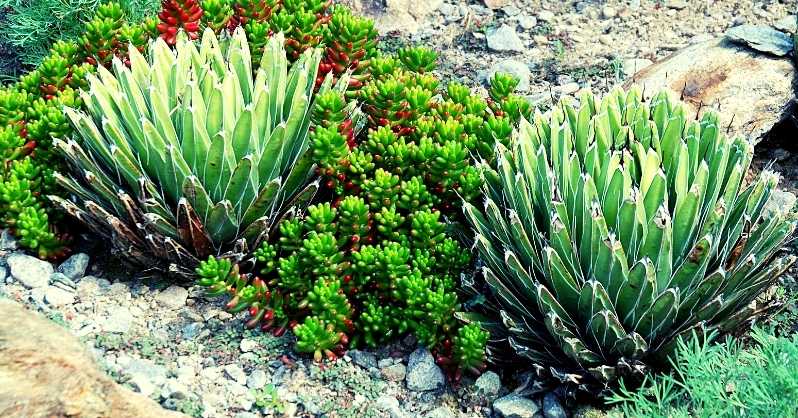
    Agave victoria reginae is a slow-growing, incredibly attractive, and evergreen perennial succulent available horticulturally. It forms a perfect clump like a sphere and rosettes. Its leaves are white-margined along the edges, which end with terminal spikes. The leaves are thick, spineless, and smooth.

    The plant is usually about 30cm or 1ft tall and 30-35cm or 1-2ft wide. But the most interesting part of this plant is that it can reach height up to 15 ft tall for its flowering stalk. Its flowering stalk is huge and enormous. The plant only flowers once in its lifetime and dies after it flowers.

    This plant does not have a lot of requirements to grow. It is easily grown in any place but preferably tropic. It demands sandy or gravelly grounds and not a lot of moisture to grow. It grows well under full sunlight but can also tolerate shades. However, it is small in size but needs an open space to grow as it has enormously tall growing flowers.

    Care Guide

    how to care Agave Victoria Reginae plant

    The agave victoria reginae requires very little upkeep. It is quite simple to grow by following a few straightforward procedures. Just a few considerations must be made before cultivating an agave victoria reginae in your house.

    The ideal soil for agave victoria reginae should have an excellent drainage system and should be light and airy. A lot of grit to the soil mixture would also be helpful to add nutrients to the soil and grow the plant better.

    The best part of growing this plant is that you don’t need to repot it frequently as it grows slows, and it is best not to shift it once it has been planted.

    You need to make sure that the plant gets full sunlight or shade of it. It grows this kind of lighting really well. But also make sure it is not under the scorching afternoon sunlight for too long, or the plant might get damaged.

    As the plant demands tropical weather, it would not do too well on its own in cold regions. But it can tolerate 10-15 degrees Fahrenheit. Also, during the rainy seasons, make sure to bring it indoors as the plant cannot tolerate the heavy rain.

    Agave victoria reginae needs water on a regular basis during the growing season. But first, let the soil fully dry up before giving it a good watering. During the growing season, you might need to water more frequently than once a week if you reside in an extremely dry region.

    During winter seasons, you need to let the agave victoria reginae be dormant. You should either water it very less or not water it at all.

    For grooming the plant, you must use clean and sharp knives and trim out the leaves of the plant which are damaged. If you see the cut edge of the plant seeping, you can dust some sulfur powder over the leaves and let them dry.

    After trimming the plant, make sure to water them properly. Also, use protective gloves while trimming, or else your skin might irritate.

    Pests And diseases

    Only two kinds of pests are seen harming the agave victoria reginae, scales, and mealybugs. These kinds of insects are considered pests as they live on the juice of the plant leaves. They also attract the agave victoria reginae and live on them.

    You can find many insecticides to treat them. It is better if you use spraying insecticides to disinfect them. You can also spray rubbing alcohol on the plant.

    What are the uses of this plant?

    What are the uses of Agave Victoria Reginae plant

    The agave victoria reginae makes a great house plant if you provide it with adequate sunlight and proper moisture and care. 

    It also makes a nice plant for xeriscaping and also coastal gardens.

    Is it toxic?

    The agave victoria reginae is a non-toxic plant to grow in your house. But, you might want to keep it out of reach from children and pets because the juice of the leaves in the plant might cause skin irritation. Other than this, the plant is of no harm.

    Is it drought tolerant?

    The agave victoria reginae is drought tolerant and also deer tolerant. Some small birds like hummingbirds might be attracted by the plant and its flower, but other than that, the plant is tolerant to drought. It can survive well.

    How big does it get?

    The agave victoria reginae usually gets up to 1-2 in length and width. But due to its flower stalk, it can grow up to 15ft long. The long flower stalk of the plant is the main attraction of the plant.

    Final Words

    Agave victoria reginae can make a wonderful house plant in any climate if you have a highly sunny interior environment. Now that you know how to properly take care of them, you can now purchase them to determine whether or not they are genuinely simple and comforting for you.

    Related Posts:

    Anthurium Water Dragon: Origin, Care, Uses

    Resources:

  • Leucophyllum Compacta: Overview, Uses & Care

    Leucophyllum Compacta: Overview, Uses & Care

    The Leucophyllum Compacta, or compact Texas Sage, is a plant that loves heat and is grown perfectly in zone 8 to 11. As they are desert shrubs, these plants require almost no maintenance. However, a bit of maintenance can take them a long way. 

    In this comprehensive guide, we’ll share a brief overview of the plant, how to care for it, and much more. Upon going through this, you’ll be better at handling these plants. So, let’s get right to it!

    Overview Of The Plant

    Leucophyllum Compacta

    Belonging to the Scrophulariaceae family, the Leucophyllum Compacta is known by many names. Some common names for this plant are Texas Sage, Texas Rain Sage, Silverleaf, Barometer Bush, Purple Sage, and Wild Lilac. 

    They mostly grow on slopes and are found in areas with alkaline soil rich in Calcium Carbonate. These are natively found in Texas and Mexico, and that’s where they get their name from.

    Although shrubs, these can grow up to 2.4 meters, which is rather tall for plants of this type. They can spread up to 1.8 meters across. However, most of these shrubs will grow only up to 1.5 meters if left unattended. 

    One of the main reasons why people grow these is their foliage. These plants not only have beautiful purple flowers but beautiful leaves as well. Their leaves are usually green with a lining of silver, and they can grow up to 2.5 cm in length. The level of silver on the leaves varies from variety to variety. 

    Leucophyllum Compacta, which is the “Compact” variety, grows up to 1.5 meters and has purple flowers and silver-green leaves.

    Care Guide

    No matter what the soil type is, loamy, clay, or sandy, you can grow Leucophyllum Compacta perfectly on it. The only thing you need to focus on in this aspect is water drainage. 

    These plants don’t fare well in muddy soil. So, ensure proper drainage, so water doesn’t clog the soil bed. 

    Another strong aspect of the Leucophyllum Compacta is that it doesn’t require any specific lighting conditions for growth. You can plant it in the shade, partial shade, or in full sun, and there won’t be any difference in the output. 

    This will help you greatly in combining areas of different lighting conditions in your garden. Plus, the plant will also look very different based on the amount of light it’s exposed to. 

    It’s one of those plants that require minimal watering for survival. If you live in a rainy area, you don’t have to water it at all. Instead, you may have to facilitate proper drainage so water doesn’t clog. 

    If you live in a dry climate, you’ll need to water this three to four times a month. You can get away with not watering these in case of a drought. 

    However, we recommend frequent watering before the plant is well-established as a shrub. 

    These plants mainly grow on dry soils on the rocky slopes of Texas. So, in most cases, you won’t have to fertilize them. 

    However, if you find that the plants aren’t flowering, you should get the soil checked by a professional. In most cases, soil with phosphorus deficiency can prevent these from blooming. However, this situation can be fixed easily with a phosphorus-rich fertilizer. 

    These plants are heat tolerant as they’re native to regions with warm climates. So, these will grow up pretty well in dry and warm climates. However, they aren’t resistant to cold, so it’s not a good idea to plant them in a gold climate. 

    You can grow these plants easily in USDA zones 6 to 10 without much effort. 

    Pests And Diseases

    Leucophyllum Compacta is a very hardy flower

    Leucophyllum Compacta is a very hardy flower, so it’s unlikely to suffer from pest or disease attacks. However, they may suffer from attacks by aphids or mealybugs, or other common garden pests. These can be dealt with easily with weak pesticides.

    Also, if you fail to provide adequate drainage depending on the area you live in, the plants may develop mildew. You may also experience this in case of inadequate airflow or space. 

    What Are The Uses Of This Plant?

    Uses Of Leucophyllum Compacta

    There are multiple uses of the Texas Sage. Let’s go through them in the following sections. 

    Beautification

    If well maintained through pruning, the Leucophyllum Compacta plants can serve well as a hedge. 

    These plants also look great when they’re planted around a border or in small containers. However, you’ll have to prune them regularly to maintain a regular shape. 

    Attracts Wildlife

    The colorful flowers of these plants can attract bees, butterflies, and hummingbirds, all of which can help pollinate them even further. Also, they’re deer-resistant, so they can also protect your garden!

    Is It Toxic?

    No, Leucophyllum Compacta isn’t toxic for human beings or pets. ASPCA has recognized this plant as non-toxic for pets. 

    Is It Drought Tolerant?

    Yes, Leucophyllum Compacta is a drought tolerant plant. However, there’s a catch to it. This plant becomes drought tolerant only when it matures properly, but it takes a long time to mature. 

    It takes at least two years for Compact Texas Sage to mature properly. Through this period, you’ll have to ensure adequate water for the plants to grow. 

    Conclusion

    Leucophyllum Compacta is one of the best plants for decorating your garden or backyard. If you live in a region with a warm and dry climate, growing these will be a breeze for you. Even if you live in a place where it rains often, you can grow these by facilitating adequate drainage. 

    Related Posts:

    Bengal Rose: Learn Everything About the Mysterious Flower

  • Pedilanthus Bracteatus: Overview, Uses & Care

    Pedilanthus Bracteatus: Overview, Uses & Care

    Also known as the slipper plant or the Tropic-Trillo, the Pedilanthus Bracteatus is a succulent plant that can brighten up any hot summer environment without much effort. 

    Yet, it’s rarely found because not many gardeners bother to know about it. Although it’s a relatively easy plant to grow, you may find its cultivation difficult if you don’t know the right methods. 

    Here, we’ll discuss how to grow Pedilanthus Bracteatus in detail.

    Overview of the Plant

    overview of Pedilanthus Bracteatu

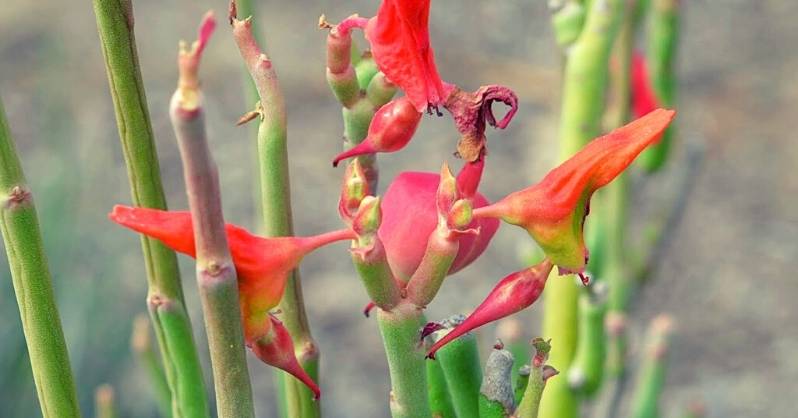
    Native to the Caribbean Basin and Mexico, the Pedilanthus Bracteatus is a succulent plant that can grow to be four feet in width and eight feet in height. The plant branches from the very beginning, so each branch of it looks like a separate plant. 

    The branches are rather thin, and they branch further off after a certain height. It’s got green stems, and they also bloom with red flowers in the summer and spring. 

    It may also have leaves that grow to be up to four inches in length. However, the leaves start to shed as the climate gets cooler. Also, when the leaves are shed, the plant looks a lot similar to a thornless Ocotillo. 

    Overall, it’s a great choice for those who want to add some verticality to their garden. 

    Care Guide

    how to care pedilanthus bracteatus

    The Pedilanthus Bracteatus is a perennial plant, and it doesn’t care much about the soil it’s planted in. This gives the gardener the flexibility to plant this in soil with any pH level. Also, the soil bed must have a good drainage system capable of preventing water clogging. 

    These plants require full sun to bloom the beautiful red flowers in summer and spring. The more sunlight you expose it to, the more flowers it’ll produce. 

    It’s a succulent plant, which means it’s rather fleshy inside and can store a lot of water. So, it shouldn’t be planted in wet soil as the plant won’t intake much water. This will lead to muddy water as well as root rot and fungal infection. 

    This plant can thrive even in the desert, and by that, you know it doesn’t require much watering. It’ll be enough to water this 3-4 times a month. In fact, even if you don’t water it, it’s likely to grow just as well because it’s drought tolerant. 

    You won’t have to fertilize it. As a desert-dweller, this plant can thrive in soil with low nutrients. 

    One of the best things about the Pedilanthus Bracteatus is its temperature tolerance. You already know that it’s a desert-dweller, so it can tolerate hot and humid climates. 

    However, it’s also very good at tolerating cold. It can survive in a climate that gets as close as minus 20 degrees. Also, it’s drought-tolerant, so humidity doesn’t affect its growth at all. 

    Pests And Diseases

    These plants are very hardy, so they rarely have any pests and diseases. However strong they may be, overwatering can lead to root rot as well as fungal outbreaks. So, refrain from watering it often. 

    Also, some of the more common bugs, such as spider mites, white flies, or mealy bugs, may attack these plants if uncared for. You can prevent these easily by using regular garden pesticides. 

    What are the Uses of this Plant?

    Pedilanthus Bracteatus aren’t particularly useful. Even then, there are two ways these plants can help you. These are discussed as follows. 

    Vertical Accentuation

    If you want to add some high vegetation to your garden, then these plants may be a good choice for you. These plants can grow up to eight feet in height, and they are quite wide as well. So, you’ll be able to cover a lot of ground with only a handful of these. 

    Water-Friendly Landscaping

    Moreover, Pedilanthus Bracteatus doesn’t require much water for cultivation or growth. Watering these only thrice or four times a month will be more than enough to help these mature. 

    This is why these are considered one of the best choices for water-friendly landscaping. This means that by cultivating these, you’re actually participating in making the world a greener place. 

    Is it Toxic?

    These plants are rather fleshy inside. They store water, and through different chemical reactions, they produce milky white saps. Upon contact, these saps can cause skin irritation and may upset your stomach upon consumption. 

    Not only human beings but also animals may be affected by these saps. So, we don’t recommend planting these if you have a pet dog or cat. 

    Is it Drought Tolerant?

    Yes, it’s a drought-tolerant plant. The Pedilanthus Bracteatus plant originates from regions with high temperatures and humidity, and they can also survive very well in the desert. So, planting these may be a good idea if you’re short of water, as they can survive very well without any, thanks to their succulent nature. 

    How Big does it Get?

    A mature Pedilanthus Bracteatus can grow up to eight feet in height, which is rather big considering the stems aren’t that thick. Also, each plant branches off and spreads up to four feet in width. 

    Conclusion

    The Pedilanthus Bracteatus is a perennial plant that can grow and mature without much maintenance. They can be planted almost anywhere in the world, will let you add some vertical accents to your garden, and are considered eco-friendly. 

    So, unless you have kids or pets in your home who may be vulnerable to the toxicity of these plants, you may benefit from planting these. 

  • Anthurium Water Dragon: Origin, Care, Uses

    Anthurium Water Dragon: Origin, Care, Uses

    If you are looking for a beautiful and easy-to-maintain indoor plant for your house, anthurium water dragon can be a great option. 

    Before you make a pick, let’s learn more about this plant to determine if it genuinely fits your preferences or not.

    What is the anthurium water dragon?

    What is the anthurium water dragon

    The anthurium water dragon is a species of anthurium, which is a genus of flowering plants which consists of more than 1,000 species. The anthurium water dragon is, in fact, a hybrid species of the genus. It is combined with anthurium ‘Red Birds’ Nest’ and anthurium ‘Watermaliense’. This species was developed by the Silver Krome Gardens.

    These plants are usually habitats in a warm environment. So they always prefer their soil to be moist and too watery but never to dry out. People around the world love to keep them as their ornamental house plants because it is very easy to maintain and also very beautiful to look at.

    What makes this plant unique?

    Anthurium Water Dragon Uniqueness

    The leaves and flowers of the anthurium water dragon make it unique from the other species of the anthurium. The leaves of the anthurium water dragon are like huge big waves, which also makes them look like giant birds’ nests. The leaves can of this plant can reach up to 36 inches in length. Usually, their leaves remain green with red veins during their early stage but later on, 50% of the leaves become maroon in the shade. It makes a nice shade of green and maroon, which attracts the attention of the people.

    Another thing that catches the attention of the people is its flowers. The flowers of the anthurium water dragons are four-petaled and found at the tip of the stems. The flowers come in different colors like red, yellow, orange, etc., but most of the time, they are bright red.

    Where does it come from?

    The anthurium water dragons are native to different parts of America, mostly from Colombia and Ecuador in South America and different other parts of Central America. Then it gets distributed directly to the Caribbeans and Mexico. Other than these countries, the rest of the world gets supplies and cultivates the plant in their own respective lands.

    As they are very easy to cultivate, people buy the seeds or seedlings of these plants and cultivate them. The plant does not have high requirements. They demand a warm environment so tropical and warm countries can easily grow them. They don’t even have a high requirement of water; they only want their soil to be moist.

     That is how, through globalization, the anthurium water dragons are available worldwide. Although it originated from America, you can now get it in your nearby plant shop as it is cultivated worldwide.

    Is it an indoor or outdoor plant?

    Is it an indoor or outdoor plant

    The anthurium water dragon can be cultivated both indoors and outdoors. They suit both kinds of weather. But mostly, they are grown indoors. They n=make an outstanding plant when cultivated in a pot. They don’t demand a lot of sunlight like most houseplants; they can be sufficed by a light amount of light,

    When grown outdoors in the garden and without a pot, it tends to grow big leaves. Although even grown on grounds, they are indistinguishable from the plants grown in pots in their early stage.

    How do you care for an anthurium water dragon?

    How do you care for an anthurium water dragon

    The anthurium water dragon is a very low-maintenance plant. You can grow it very easily through a few simple steps. You just need to keep a few things in your mind before growing an anthurium water dragon in your house.

    Temperature

    As the plant originates from a habitat of warm weather, it also demands a similar kind of weather. So, the plant should be kept at a minimum of 65 degrees Fahrenheit. If the temperature falls less than this, it would be challenging to keep the plant alive, and it would probably die eventually in cold weather.

    Soil

    The anthurium water dragon prefers its soil to be moist, and it loves to get irrigated. Another likable situation for the plant has water in its leaves. As the plant is an epiphyte, it also demands rich soil with a good or well-structured drainage system. So, it is necessary for you to make sure that the pot in which the plant is planted has a proper drainage system. Without a proper drainage system, water would accumulate around the roots, and the plant would eventually.

    Sunlight

    The plant does not demand a lot of sunlight, a partial amount of sunlight is all that the plant requires. These can be kept either directly or indirectly under the sunlight, but make sure they do some sunlight which they would need to survive through making their food and also grow.

    Watering

    The anthurium water dragon should be watered moderately once every 10 days. Its roots should not be soaked in water for a long time and not left to dry out either. Another interesting fact about this plant is that they reproduce through pollination. So, if you want to grow fruits out of it and make seedlings from their seeds, you need to buy a plant of the opposite gender to your existing plant.

    Fertilizing

    Fertilizing is not mandatory, but it will surely help your anthurium water dragon to grow faster. You need to use a slow-release fertilizer for this plant and spray it from at least 6 inches away thrice a year. Don’t buy the cheap ones as the heavy salts inside may damage the roots of the plants.

    Can You Use Tap Water For Them?

    Tap water should be fine to use for watering the anthurium water dragon, but before using it check if the water is softened or not. Tap waters can be softened sometimes, which would cause a salt build-up in the roots of your plants and might damage them as well. So, it is safe to use filtrated water unless you are sure if your tap water is softened or not.

    Final Words

    The anthurium water dragons make a great houseplant. Now that you know how to take care of them properly, you can buy them to see if it is actually easy and comforting for you or not.

    Related Posts:

    Agave Victoria Reginae: Overview, Uses & Care

    Ingrid Liz Ivy | All You Need to Know

  • Pittosporum Tenuifolium: All You Need to Know

    Pittosporum Tenuifolium: All You Need to Know

    Pittosporum tenuifolium is a plant that’s worth knowing about. We’ll be looking at its origins, physical characteristics, uses and finally provide some pointers on how to care for it. If you’ve been meaning to grow a Pittosporum Tenuifolium but weren’t sure how to, this article has you covered.

    What Is Pittosporum Tenuifolium?

    What Is Pittosporum Tenuifolium

    Pittosporum tenuifolium is a type of evergreen tree that is generally smaller in size than other evergreen trees. Mature Pittosporum Tenuifolium grows up to around 33 feet in height. The Tenuifolium in its name refers to the thin leaves it possesses. Alternative names for this tree include kōhūhū and black matipo, which are names that originate from its native land of New Zealand.

    Where Does It Come From?

    The tree, Pittosporum tenuifolium, originates and is primarily found all over New Zealand. You’ll see it almost everywhere in New Zealand outside of the Southern Alps. You can find tree inhabiting coastal lands and forests. They are also used to fence the gardens.

    Over time, there have been Pittosporum Tenuifolium spotted in areas of Australia and California. They are mostly located in the coastal sections of said areas. 

    Physical Characteristics

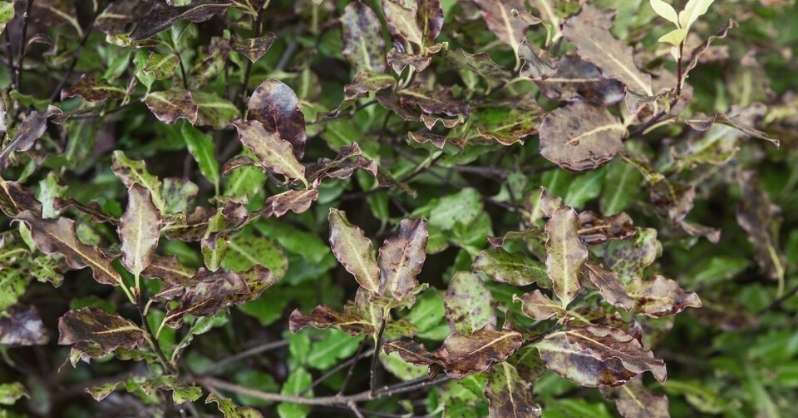
    The physical appearance of the Pittosporum tenuifolium can be somewhat determined by its namesakes. It has slender or thin leaves, with the leaves generally being oval-shaped. Leaves are generally darker on the upper face and have a lighter hue on the lower face that is not exposed. 

    Due to the leaves, it might be hard to spot the small dark red flowers sprouting. Inside these flowers, you can spot the dark seeds that are encapsulated by the flower petals. The black matipo name originates from these highly visible black seeds present in the flowers. 

    These petals have a distinct aroma to them but only during the night. This scent is of the honey nectar contained within them, and the Pittosporum tenuifolium can be seen to attract bees.

    The Pittosporum Tenuifolium tree grows quite fast and can be seen to bloom in Spring. They have shallow roots and, despite their small stature are quite strong. 

    What Are Its Uses?

    What Are Uses of Pittosporum Tenuifolium

    Pittosporum Tenuifolium has some unique uses. Some of the common ones are detailed below:

    Stabilizing Water Flow

    Due to how the roots of this particular tree are, they can help control water flow in areas. Due to them being found in coastal areas, they can be seen to slow down water flow. Properly planting them can help control water flow in an area preventing water from flowing into the land.

    Preventing Water Pollution

    Continuing from the previous point, Pittosporum tenuifolium can additionally help with preventing water pollution. They primarily do this by preventing water erosion which can lead to foreign objects entering a water stream. 

    Resin And Oil Extracts

    The resin and oil can be extracted from the Pittosporum tenuifolium. They are scented and can be used as fragrances. The oil has slight medicinal properties, and this is primarily used by the Maori people in New Zealand.

    Garden Plant

    Finally, Pittosporum tenuifolium can be used as a garden plant. Their unique look can suit well to certain gardens, and they are often used as bushes. They are hardy plants that can grow in tough conditions, so as a result, they are looked at favorably by gardeners. 

    Maintenance And Care Tips

    Maintenance And Care Tips for Pittosporum Tenuifolium

    Pittosporum tenuifolium isn’t too difficult to take care of, but there are a few things you should keep in mind. Here are two tips that you should try to incorporate to ensure the best growth for your Pittosporum Tenuifolium:

    • Getting the soil’s water content is the most important part of ensuring that this plant grows properly. The balance can be difficult to strike since you want the soil to be moist, but you don’t want water to overflow as it can cause decay.
    • Sunlight is essential for this plant. You want to ensure it gets a good degree of sunlight, and due to its height, you should not put it near other taller plants. Partial shade is fine but not always recommended.

    Common Problems With The Plant

    Common problem with Pittosporum Tenuifolium

    The primary problem you will encounter with the Pittosporum Tenuifolium is an attack from insects and fungus. Several insect species prey on this plant, so you’ll need to take proper care and place preventative measures to ensure your plant does not die from pest attacks.

    Fungal infections can cause the plant to rot. There isn’t any remedy for this, and you should spot early signs of infection as fast as possible and remove the infected parts.

    Conclusion

    Hopefully, this article has given you a bigger insight into the Pittosporum tenuifolium plant. It is a very useful plant and if you plan to grow it in your garden, be on the lookout for insects that prey on it. 

  • Are Plants Asexual? A Complete Discussion

    Are Plants Asexual? A Complete Discussion

    Like all other living beings, plants also need to reproduce to perpetuate their species. But they don’t always need fertilization by the fusion of two different parent. So, are plants asexual? Not all of them. Plants can reproduce both sexually and asexually. 

    But a question might arise in your mind how would plants reproduce without fertilization. Well, in asexual reproduction, plants replicate their species or, simply put, make clones of themselves. The mother plant and its offspring are always genetically identical, unlike the sexually produced plants.

    Let’s know more about how plants reproduce asexually and what type of plants can produce asexually and sometimes both sexually and asexually.

    What is Asexual Reproduction?

    What is asexual reproduction

    Asexual reproduction can be termed as a mode of reproduction which does not need fertilization or fusion of male and female cells to produce offspring, rather, it produces genetically identical offspring. Both multicellular and unicellular species can reproduce asexually. 

    There will be no gamete fusion involved in this procedure, and the number of chromosomes will remain the same. With the exception of specific situations where there is a possibility that a rare mutation will occur, it will acquire the same genetic traits as the parent.

    Some of the common characteristics observed in asexual reproduction are:

    • No fertilization or fusion of male and female gametes is required.
    • Only a single parent is involved in the whole reproduction process.
    • The mother plant produces genetically identical offspring.
    • There will be no change in the number of chromosomes.
    • The process does not take a very long time.
    • The growth of the offspring is very high.

    As no fertilization or fusion of male and female cells occurs, there is no formation of the seed in asexual reproduction. They produce through the different parts of their bodies like roots, stems, and leaves. Using these parts of their bodies, the parent plant usually regenerates itself.

    Why Plants are asexual?

    Why Plants are asexual

    Other than a few exceptions, you will notice that all the plants which reproduce asexually are invertebrates. 

    They reproduce asexually because they do not have the well-formed reproductive system which a plant must have in order to reproduce sexually. These plants do not form or propagate any seed, which is why they need to reproduce asexually.

    Another reason for these plants to reproduce asexually is the changing environmental conditions. 

    The offsprings of sexually reproductive plants have the ability to survive changing environments, which the asexually reproduced plants lack. That is why they are cloned so that they would not need to adapt to the changing environment.

    If you look into some of the plants that reproduce asexually, like a hydra, sponge, honeybees, etc., you will find that these invertebrates do not have well-formed structures, and so they reproduce asexually to replicate and perpetuate their species. 

    How Do Plants Reproduce Asexually?

    How Do Plants Reproduce Asexually

    Asexual reproduction can be both in natural and artificial methods. There are different kinds of methods through which plants reproduce asexually. The main four types of asexual reproduction process are

    • Fission
    • Budding
    • Fragmentation
    • Parthenogenesis

    Let us see a brief description of each type of asexual reproduction method of plants to understand their functions better.

    Fission

    The meaning of the word ‘Fission’ is to divide. In this process of asexual reproduction, plants divide their bodies into two separate entities to create genetically identical offspring. 

    The parent nucleus first undergoes mitotic division, producing identical entities with two genetic materials in each. The newly created body is subsequently divided by the cytoplasm through cytokinesis. Fission can be both binary or multiple. 

    In the binary fission process, plants divide their bodies into two parts as their new individuals. Whereas in multiple fission, they divide themselves into numerous parts.

    Budding

    The process of budding means that the plant will separate a part from its body to create a new genetically identical individual of its own. A bud first develops as a little lump on the parent’s body wall. 

    The bulge then extends to create a stalk that sprouts some features, like tentacles extended from the body. When the cavity reaches maturity, it separates and begins to live on its own. A bud may occasionally stay connected to its parent while relying less on it or perhaps thriving totally on its own.

    Fragmentation

    In the process of fragmentation, the parts of a plant’s body split into several pieces to reproduce. These separated pieces then form the other missing pieces which did not separate from the body through regeneration. Animals’ fragmentation aids in their ability to regenerate any damaged or broken body parts. 

    There are some plants that have the capacity to split into two or more pieces, with each new piece developing into a distinct, new individual. They grow quickly and in a short amount of time. Few plants have the ability to develop adventitious plantlets that eventually separate to grow into separate plants, and the other organisms produce organs.

    Parthenogenesis

    Parthenogenesis is a unique process of asexual reproduction in plants that develops an embryo without being fertilized by male sperm. 

    They develop some unfertilized eggs, which turn into genetically identical offspring of the plant. Some plants undergo the process of parthenogenesis for reproduction needs, whereas some plants are simply propelled by the condition and its challenges around them. 

    One good example of this can be aphids which simply undergo parthenogenesis because it has an excess amount of nutrients forming inside them and not because it has to reproduce offspring.

    How Asexual Reproduction Benefits Plants

    How Asexual Reproduction Benefits Plants

    Asexual reproduction in plants may only seem like a way of reproducing the plants, but they come with some benefits as well. Some of the benefits or big advantages are mentioned below.

    • Asexual reproduction helps in the preservation of different genetical characteristics of the plants.
    • It is not dependent on parents of different genders to mate in order to reproduce.
    • The process of asexual reproduction has fast growth and reproduces in very less time.
    • Propagating plants that have no means of seeds to produce offspring.

    Drawbacks Of Asexual Reproduction In Plants

    Although there are plenty of advantages seen from the asexual reproduction of plants, they certainly come with some drawbacks as well. Let us find out the disadvantages or limitations of asexual reproduction.

    • As genetically identical offspring is produced, diversity is not seen in these plants.
    • They face many difficulties adapting to the ever-changing environment
    • A minute change in the habitats of the plants might destroy the entire species.

    Conclusion

    It is quite fascinating to see plants reproduce asexually in such unique ways without being fertilized or fused by two parent trees. But as their adaptability to the changing environments is very, it might destroy a single line of species entirely. With the alarmingly rising concerns of global warming, these plants might soon.

    Resources:

  • Are Artichoke Plants Perennials?

    Are Artichoke Plants Perennials?

    Artichokes are part of the thistle family and are known mostly as a very healthy vegetables. If you haven’t studied much botany, then it’s very normal for you to not know what kind of plants artichokes are. 

    As these plants can seem to be very hardy, you might wonder are artichoke plants perennial? Today, we are going to be answering that question and along with that, we will also be providing a reasonable explanation for you. We also have to let you know about this plant’s uses, so let’s quickly get into the real discussion!

    Why Are Artichoke Plants Perennial?

    Why Are Artichoke Plants Perennial

    For a plant to be considered a perennial it needs to have an average lifetime of more than 2 years. Turns out that when grown in the right climate artichoke plants can live as much as 6 years. During early spring, these plants grow rapidly to a decent size. 

    Plants that do not have woody growth also often fall in the perennial category, and since artichokes don’t have woody stems, they can be called perennials just like pepper and mint are perennials. These plants aren’t tall at all, they usually grow only up to 3 feet in height, and have a diameter of about 7 inches. 

    What are the Uses of Artichoke?

    It has been proven that artichokes are beneficial plants in many ways that you may not have known before. Below, we have discussed some common uses of artichokes. 

    Can be Eaten as a Regular Dish 

    Artichokes have been eaten as vegetables from the time of Romans till now. They actually can be a great side vegetable dish because they have a slightly nutty taste and can be used as an alternative for asparagus. Most importantly, there are many great nutrients that you get by eating this vegetable. 

    Used as Garden Ornaments

    Although this plant is usually harvested for its vegetable, it also blooms these beautiful purple flowers. These distinctive flowers can make your garden look more gorgeous, so you should consider planting artichokes. 

    Helps Treat Many Health Issues

    Some studies have shown that artichoke may help with liver issues, and can make a substantial improvement with cholesterol problems as well. 

    Artichoke extract is sometimes ingested by patients dealing with indigestion problems and nausea. It is supposed to help in reducing stomach aches, nausea, and vomiting. 

    https://m.youtube.com/watch?v=SX0oYcizxro&t=63s

  • Why Mint Plants Are Perennial? All the Reasons

    Why Mint Plants Are Perennial? All the Reasons

    Mint is one of the most popular herbs, and they are used in many different things from cooking to making home remedies. Have you ever wondered what kind of plants mint plants are? There are some characteristics of mint plants that indicate that they may be perennials. So, are mint plants perennial? Yes, they are!

    In this article, we are going to be elaborating on the answer to this question, and we will also be looking at all the different uses of mint. Without further ado, let us get into discussing why are mint plants perennials. 

    Why Are Mint Plants Perennial?

    Why Are Mint Plants Perennial

    So that we can go into explain why mint plants are perennials, you will have to know what perennial plants are. A plant that can live over 2 years can be classified as a perennial plant. The term perennial essentially means ‘through the years’ so it is a word to describe plants that aren’t short-lived. 

    Since mint plants live for about 5 to 10 years on average they can easily be classified as perennials. Mint plants will especially live a very long life if they are potted, and taken care of. Like other perennials like artichoke, mint is quite easy to grow and has the tendency to overgrow at times. 

    The plant becomes dormant during winter, but it still stays very much alive. There are many variations in mint plants, and all of them are perennials. 

    What Are the Uses of Mint?

    What Are the Uses of Mint

    As you know, mint is a very useful herb, and is used in households across the world for a variety of reasons. 

    Food and Drinks

    Mint adds a very refreshing taste when added to dishes. You can chop some of it and add it to a salad or even add it to your curry dishes for a unique flavor. Summer seems to be incomplete with cooling mint drinks. This herb makes cold mojitos taste even more refreshing on a hot summer day!

    Mouth Cleaning Products

    The cooling sensation from natural mouthwashes comes from the mint in them. They are great for freshening up your breath and making you smell clean. 

    Hair and Skincare

    A lot of shampoos that leave a cooling effect on your scalp have mint ingredients in them, and you may use them to condition your hair as well. Companies also add mint to some skincare products to make your face feel fresher after your care routine!